Powdered Mimosa Hostilis Root
Botanical use only
$37.501/4 lb
Natural dyeing has its own vocabulary, and most of it is precise: how much of something to use, measured against what, at which point in the process. This glossary defines the terms used across our dyeing articles, from weight of fibre and scouring to mordant, saddening and fastness, each with a link to the full method.
Editorial Team · Compliance and product research · Updated
Every term below is defined the way it is used in the articles on this site, so a percentage in one article means the same thing in the next. Where a term has a full article behind it, the definition links there.
The terms are grouped in the order you meet them: measuring, preparing the fibre, fixing the colour, the dye pot, what happens after it, and judging the result.
| Term | What it means |
|---|---|
| Weight of fibre | The dry weight of the fibre before it is wetted, often written WOF. Every percentage in a dye recipe is a percentage of this figure, so 12% alum for 100 grams of wool means 12 grams of alum. |
| Depth of shade | How much colour the fibre ends up holding, set mainly by how much bark is used against the fibre weight. Fifty to a hundred grams of bark per hundred grams of dry fibre gives a full shade on wool. The arithmetic is in how much root bark per pound of fibre. |
| Batch code | The code printed on a bag that identifies one harvest and production run. No two harvests are identical, so the code belongs in every dye note. See what a batch code is. |
| Term | What it means |
|---|---|
| Scouring | Washing fibre in hot water with a pH-neutral detergent before anything else, to remove grease, spinning oil and dirt. Fibre that is not scoured wets unevenly and dyes in patches. |
| Protein fibre | A fibre grown by an animal: wool, silk, alpaca, mohair. Protein fibres take bark colour readily. See protein and cellulose fibres in a bark dye bath. |
| Cellulose fibre | A fibre grown by a plant: cotton, linen, ramie. Cellulose holds natural colour poorly on its own and relies on tannin and a mordant to keep it. |
| Felting | Wool fibres locking together permanently under heat, moisture and movement. Wool at temperature is turned gently, or not at all. |
| Term | What it means |
|---|---|
| Mordant | A metal salt applied to fibre so that colour binds to it and survives washing. Without one, bark colour on wool rinses out. |
| Alum | Potassium aluminium sulfate, the usual mordant for wool, at 10 to 15% of the fibre weight and fully dissolved before the fibre goes in. Undissolved crystals are the commonest cause of pale patches. See mordanting wool with alum. |
| Cream of tartar | Potassium bitartrate, an optional addition to an alum mordant at 5 to 7% of the fibre weight. It keeps wool soft. |
| Tannin | A class of plant compounds that bind to protein and to metal ions. It is why tannin-rich bark colours wool so deeply and why iron darkens it so far. See what tannins are and why dyers want them. |
| Term | What it means |
|---|---|
| Dye bath | The pot of water holding the colour, into which the wet, mordanted fibre goes. |
| Cold soak | Leaving bark in cold water overnight before any heat, so colour starts moving out before the pot is warmed. See cold soak or hot bath. |
| Just under a simmer | Around 80°C or 175°F: the first small bubbles at the base of the pot and nothing rising. Boiling turns bark colour brown, and that cannot be undone. See getting purple instead of brown. |
| Exhaust bath | A dye bath that has given up most of its colour. Shredded bark reliably gives a paler second bath, and often a third. See second and third baths from the same bark. |
| Straining | Removing the bark from the bath before the fibre goes in. Powder needs a double layer of muslin. See filtering powder out of a dye bath. |
| Term | What it means |
|---|---|
| Modifier | Anything applied after dyeing to move the colour. For bark, the two that matter are iron and pH. |
| After-bath | A separate pot of warm water holding a modifier, which the dyed and rinsed fibre goes into. A modifier is never added to the dye pot itself. |
| Saddening | Darkening a colour with iron, towards plum, slate and charcoal. Ferrous sulfate at 1 to 2% of the fibre weight, in a pot kept for iron, dipped briefly and lifted early. See the iron modifier. |
| Ferrous sulfate | Iron sulfate, the salt dyers use for saddening. More than 2% of the fibre weight leaves wool wiry and weakened. |
| pH shift | A mildly alkaline after-bath pushes a bark shade warmer and redder; a mildly acidic one cools and lightens it towards pink. Do pH first and iron last. See pH as a colour control. |
| Term | What it means |
|---|---|
| Lightfastness | How well a colour resists fading in light. Tested at home by exposing half a sample in a sunny window for four weeks against a matching piece kept in a drawer. See lightfastness and washfastness tested at home. |
| Washfastness | How well a colour survives washing. Tested by washing a sample three times exactly as the finished piece will be washed. |
| Control | A sample dyed alongside the others and then left alone, so any change in the rest can be seen against it. |
| Test card | Dried samples pinned to card, each labelled with fibre, mordant, bath, modifier and batch code. See powder for small-batch testing. |
| Term | What it means |
|---|---|
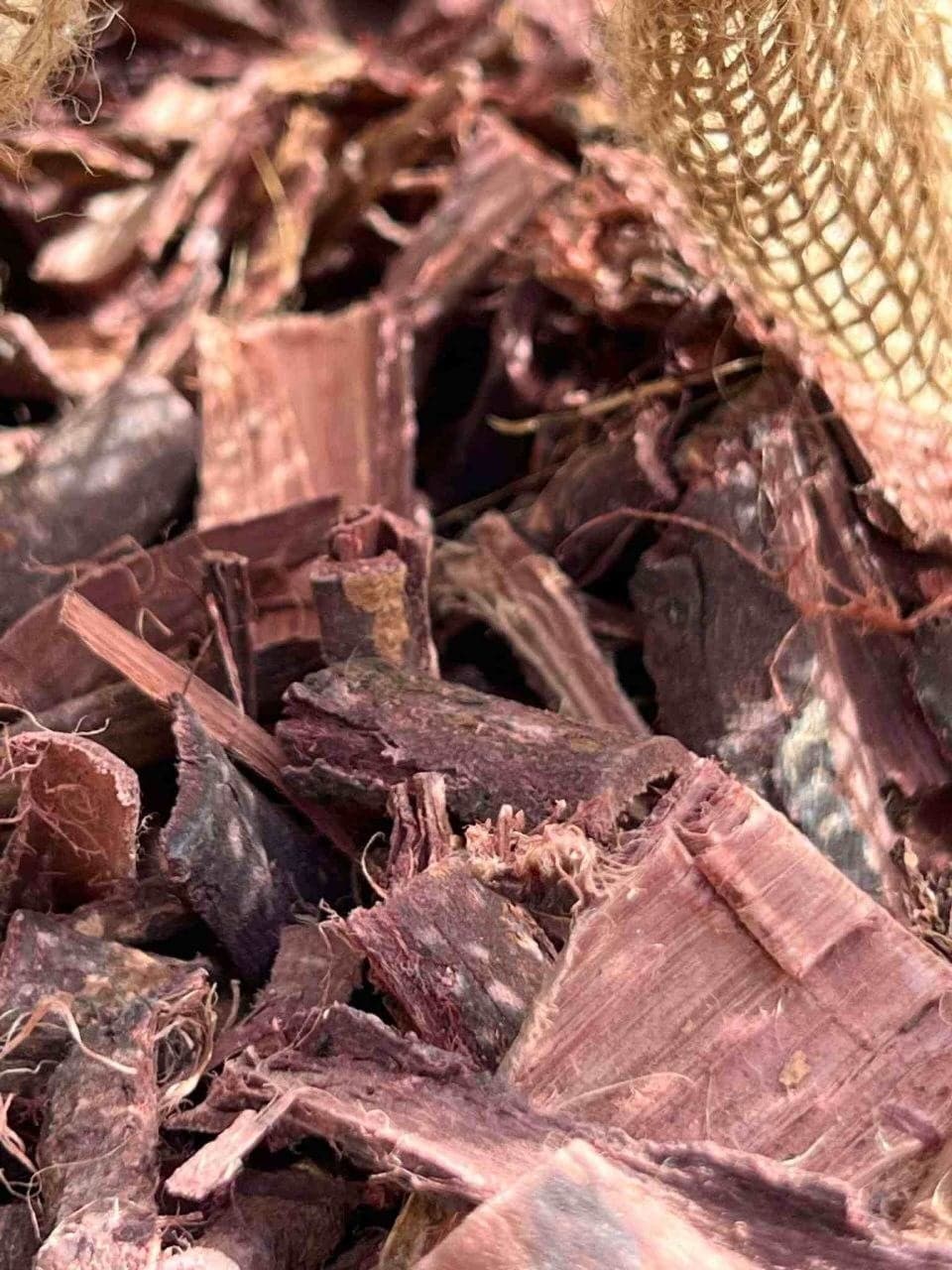
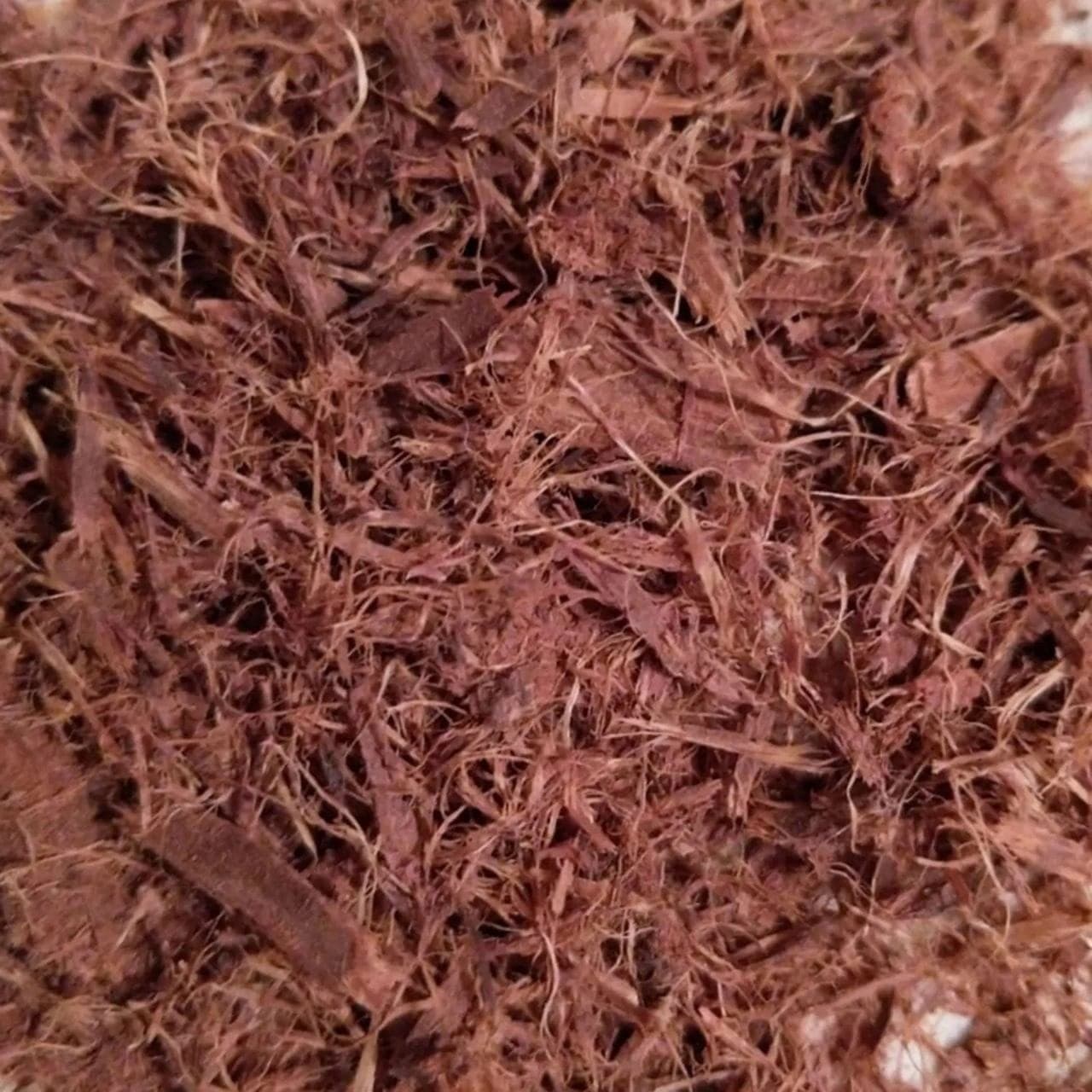
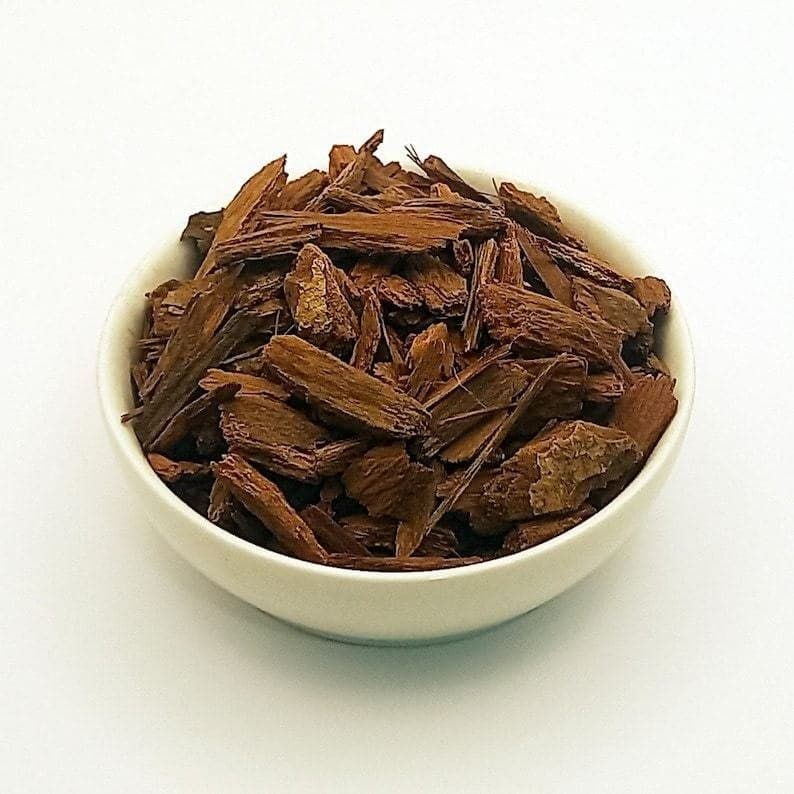
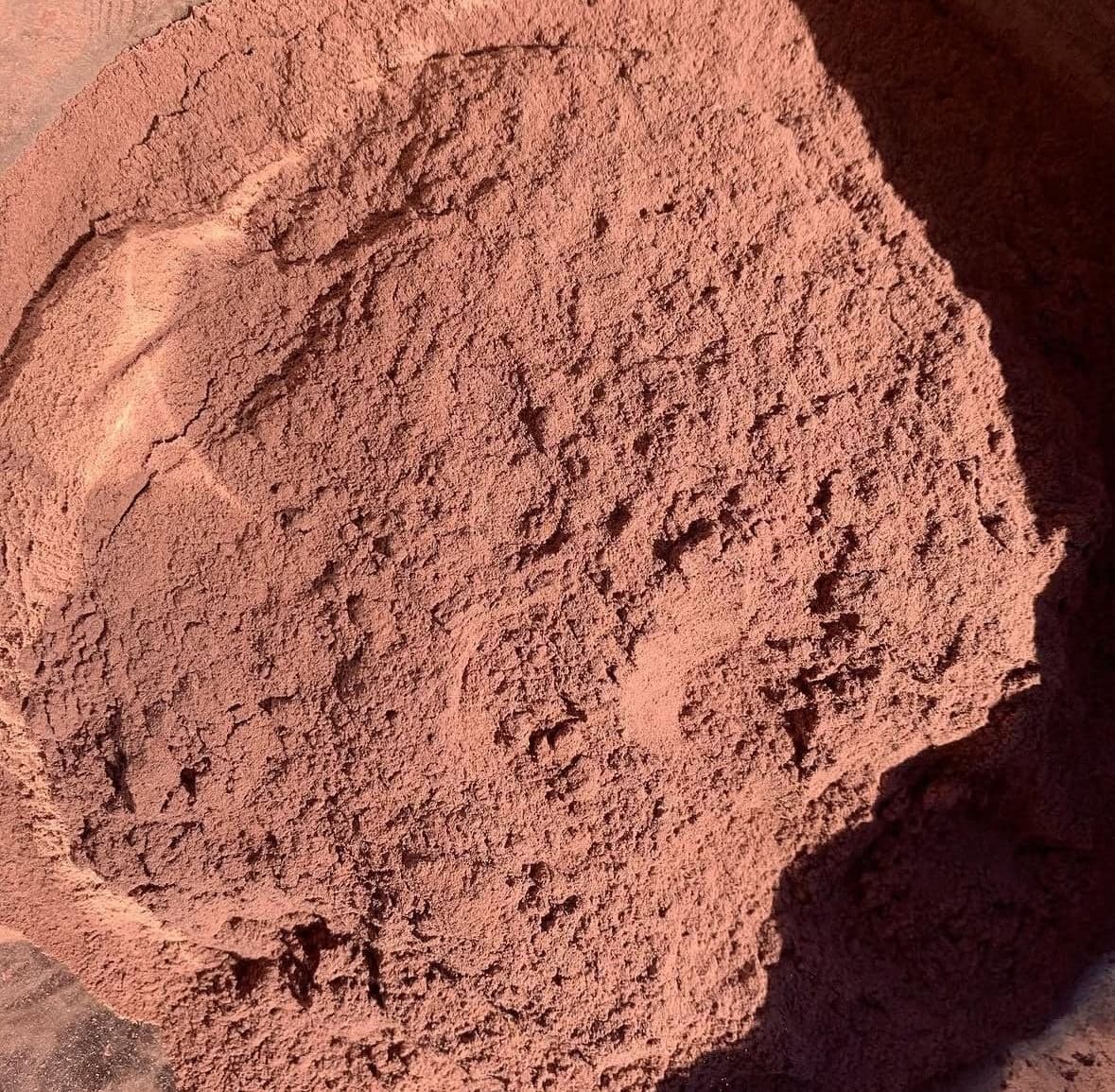
| Powder | Bark milled fine. The fastest colour, the most filtering, the poorest second bath and the shortest shelf life. |
| Shredded bark | Bark cut into coarse pieces. Slower colour, lifts out cleanly, and gives a real second bath. |
| Stripped root | Whole root, the least processed form. Keeps longest, and asks the most preparation before use. |
How the three compare, side by side, is in powder, shredded or stripped, and why particle size changes so much is in why powder behaves differently from bark.
The background to the material itself is in the guide to what mimosa hostilis root bark is. The commonest faults, most of which are one of the terms above done slightly wrong, are in eight mistakes in a first dye bath.
Everything described here is raw botanical material sold for dyeing, soap making and craft work. It is not food, it is not a supplement, and it is not for human consumption. Nothing on this page is a recommendation to put any of it in or on a body.
Part of our guide: What Is Mimosa Hostilis Root Bark?
Alum at ten to fifteen per cent of the dry fibre weight, fully dissolved in hot water, held just under a simmer for an hour, then cooled in the pot. It is what makes bark colour survive washing. Cream of tartar keeps the wool soft. Undissolved crystals are the commonest cause of pale patches.
Vegetable-tanned leather takes bark colour well because it is already full of tannin. Chrome-tanned largely does not. Work in thin coats on clean, dry leather, let each dry fully, and condition afterwards. Test on an offcut from the same hide, because leather varies across a single skin.
Shredded bark is rarely spent after one bath. A second gives roughly half to two-thirds the depth, and a third gives a pale tint that is often the prettiest on silk. Powder gives almost everything on the first pass. Plan the order before you start, because you cannot climb back up the ladder.
Your cart is empty
Everything we sell is batch-tested, and we tell you what ships to your state before you add it.
Browse the shop