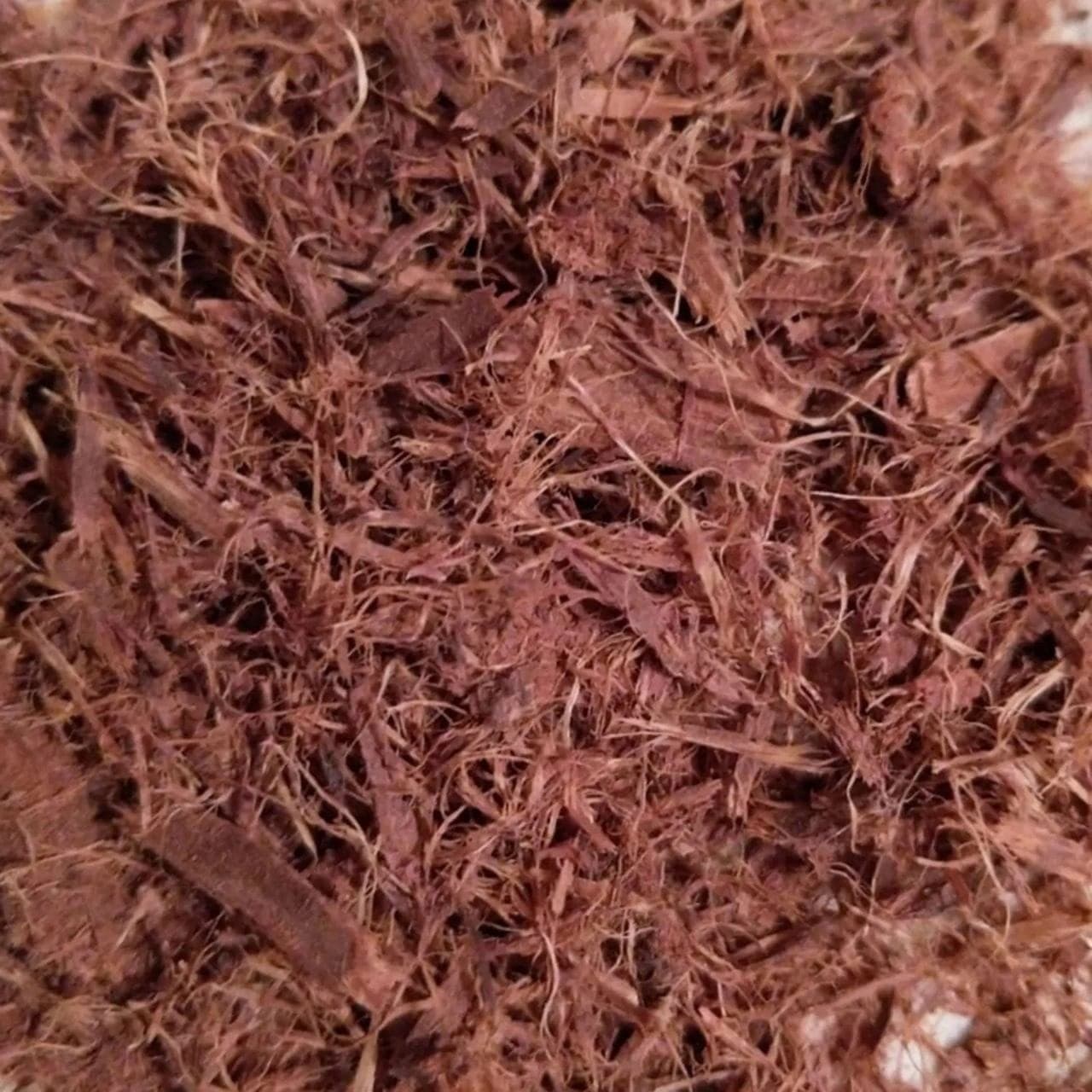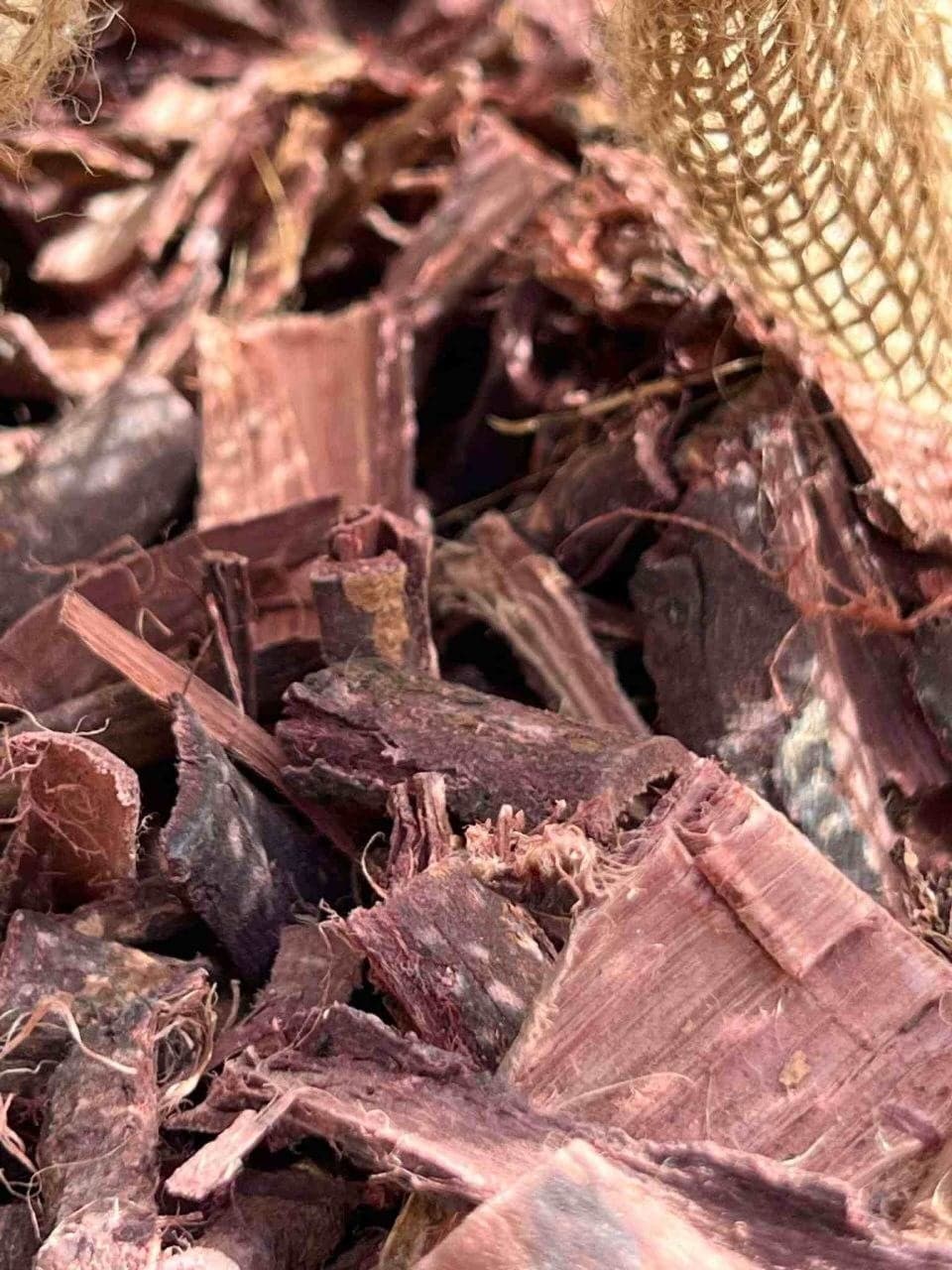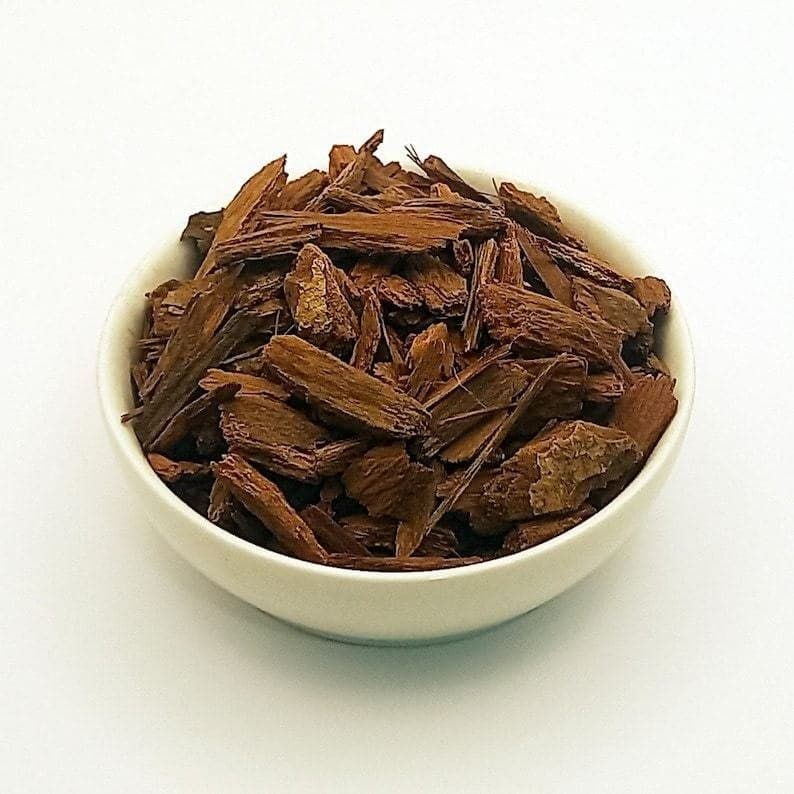
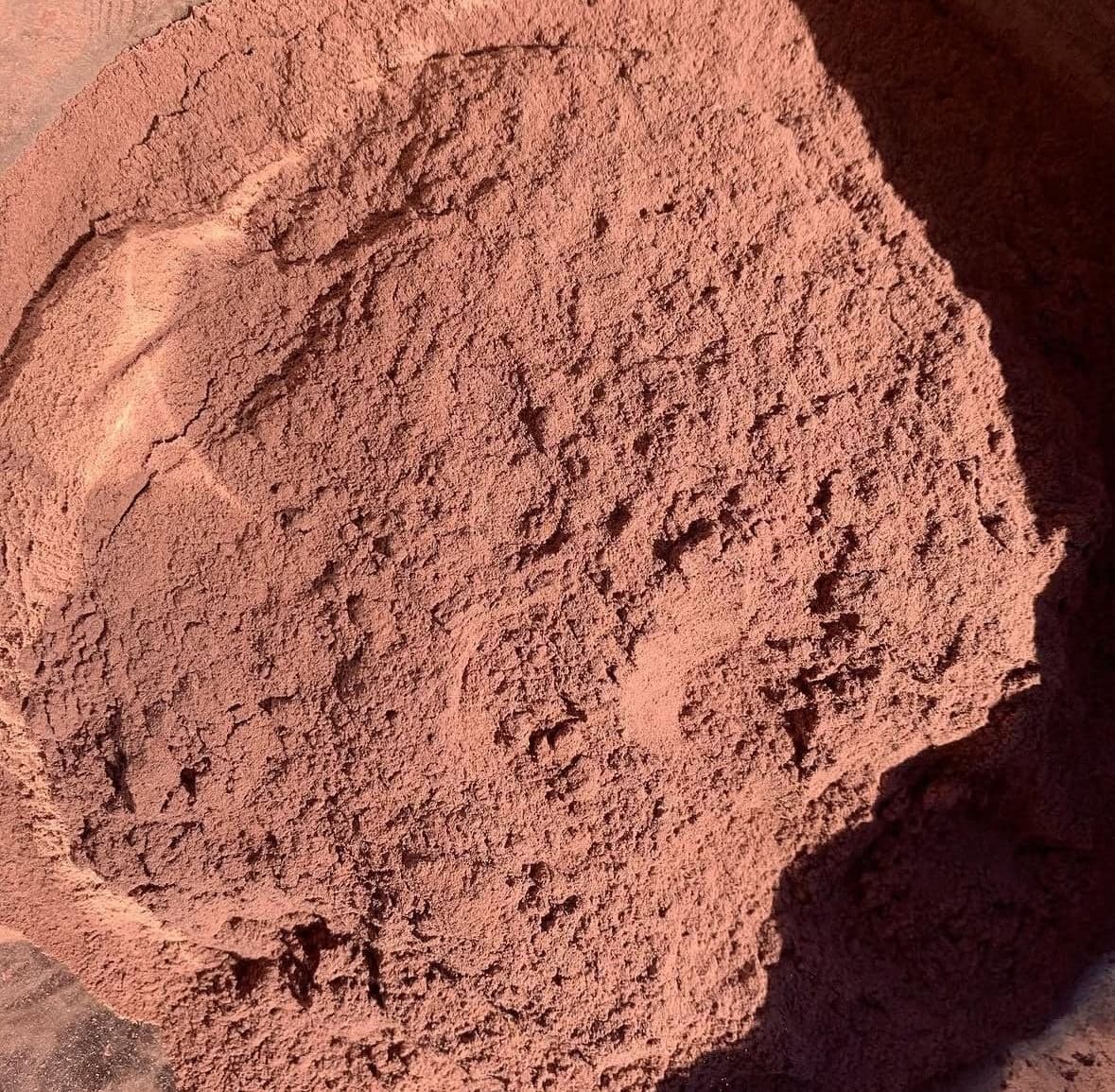
Powdered Mimosa Hostilis Root
Botanical use only
$37.501/4 lb
Your cart is empty
Everything we sell is batch-tested, and we tell you what ships to your state before you add it.
Browse the shop
Nearly every disappointing first result comes from one of eight things: boiling the pot, skipping the scour, undissolved alum, guessing quantities, crowding the fibre, judging colour wet, shocking wool with cold water, or writing nothing down. All eight are free to fix and none of them is about the bark.
Editorial Team · Compliance and product research · Updated
A first dye bath rarely fails for an interesting reason. It fails for one of a short list of ordinary ones, and the list is the same whether you are working with bark, roots or leaves.
What follows is ordered roughly by how much damage each one does.
The single most common fault and the most destructive. A rolling boil shifts the compounds that read as purple permanently towards flat brown, and cooling the pot afterwards does not bring them back.
Hold the bath around 80°C / 175°F — the first small bubbles at the base of the pot and nothing rising. If you own no thermometer, buy one before you buy more bark; it is much the cheaper of the two mistakes. The full argument is in getting purple instead of brown.
Spinning oils on commercial yarn, sizing on woven cloth and ordinary handling grease all block colour in patches. Nine times out of ten, a blotchy skein is a scouring problem wearing a dyeing costume.
Wash in hot water with a pH-neutral detergent, rinse thoroughly, and keep the fibre wet from that point on. A fibre that dries out mid-process rewets unevenly, and uneven wetting is uneven colour.
Alum crystals dropped into the pot whole do not distribute. They sit against whatever they touch and mordant that spot far more heavily than the rest.
You will not see it at the mordanting stage, because mordanted wool looks like unmordanted wool. You see it after dyeing, as hard-edged pale or dark patches, and by then the piece is finished. Dissolve it in a jug of very hot water first, every single time — see mordanting wool with alum.
A handful of bark is not a measurement. Weigh the fibre dry, then work the bark and the mordant as percentages of that weight.
Without those numbers you cannot repeat a success, and you cannot diagnose a failure — a brown skein tells you nothing on its own and tells you a great deal next to a note saying the pot reached a boil. The arithmetic is in how much root bark per pound of fibre.
Fibre packed into a pot cannot move, the bath cannot circulate through it, and creases come out as pale lines that run the length of a skein.
Use a pot big enough that everything floats freely, and turn it gently once or twice during the bath. Gently is the operative word with wool at temperature — vigorous stirring is how felting starts.
Everything reads darker, richer and more saturated wet. A shade that looks perfect in the pot can dry two full tones lighter, and people who judge wet consistently overshoot in the other direction when modifying.
Squeeze a corner, dry it properly — a hairdryer is fine — and look at it in daylight before deciding whether to continue. This matters most when using pH or iron, where the change is fast and not always reversible.
Hot wool dropped into cold water felts. Felting is structural and permanent, and it ruins more yarn than every colour mistake on this page combined.
Let the bath cool with the fibre in it — which also deepens the colour, so you lose nothing — and rinse in water close to whatever temperature the fibre is currently at.
Six lines: fibre and dry weight; mordant and percentage; bark form and percentage; temperature and time; water source; batch code from the bag.
The first time you want a colour again, those six lines are the difference between reproducing it and starting over. They are also what makes the fastness tests meaningful, because a faded sample is only informative if you know what produced it.
Dye a sample first. A ten-gram test skein, from the same fibre and the same bath, costs almost nothing and catches every one of these before a garment is involved.
This is the habit that separates people who get consistent results from people who get occasional lucky ones. Powdered Mimosa Hostilis Root is well suited to testing precisely because it gives colour quickly and you are not trying to be economical.
Buying the wrong form. There is no wrong form — powder, shredded and stripped all reach the same colours, they differ in handling and in whether you get a second bath.
Blaming the bark. It is almost never the bark. Bark does vary between harvests, which is why the batch code exists, but a single disappointing result is far more likely to be temperature or scouring. Test before you conclude.
Add a ninth mistake: using plain alum on cotton or linen and expecting it to work. Cellulose needs a different mordant system altogether, and skipping it is the usual reason a cotton piece comes out pale and then washes out a fortnight later. See protein and cellulose fibres.
Everything described here is raw botanical material sold for dyeing, soap making and craft work. It is not food, it is not a supplement, and it is not for human consumption. Nothing on this page is a recommendation to put any of it in or on a body.
Part of our guide: What Is Mimosa Hostilis Root Bark?
Weigh the fibre dry, then work every other quantity as a percentage of that weight. Fifty to eighty per cent of the fibre weight in bark is the everyday range for a full shade on wool. Thirty gives a tint, a hundred gives depth, and above about a hundred and twenty you are heating material that stays in the pot.
Vegetable-tanned leather takes bark colour well because it is already full of tannin. Chrome-tanned largely does not. Work in thin coats on clean, dry leather, let each dry fully, and condition afterwards. Test on an offcut from the same hide, because leather varies across a single skin.
Shredded bark is rarely spent after one bath. A second gives roughly half to two-thirds the depth, and a third gives a pale tint that is often the prettiest on silk. Powder gives almost everything on the first pass. Plan the order before you start, because you cannot climb back up the ladder.