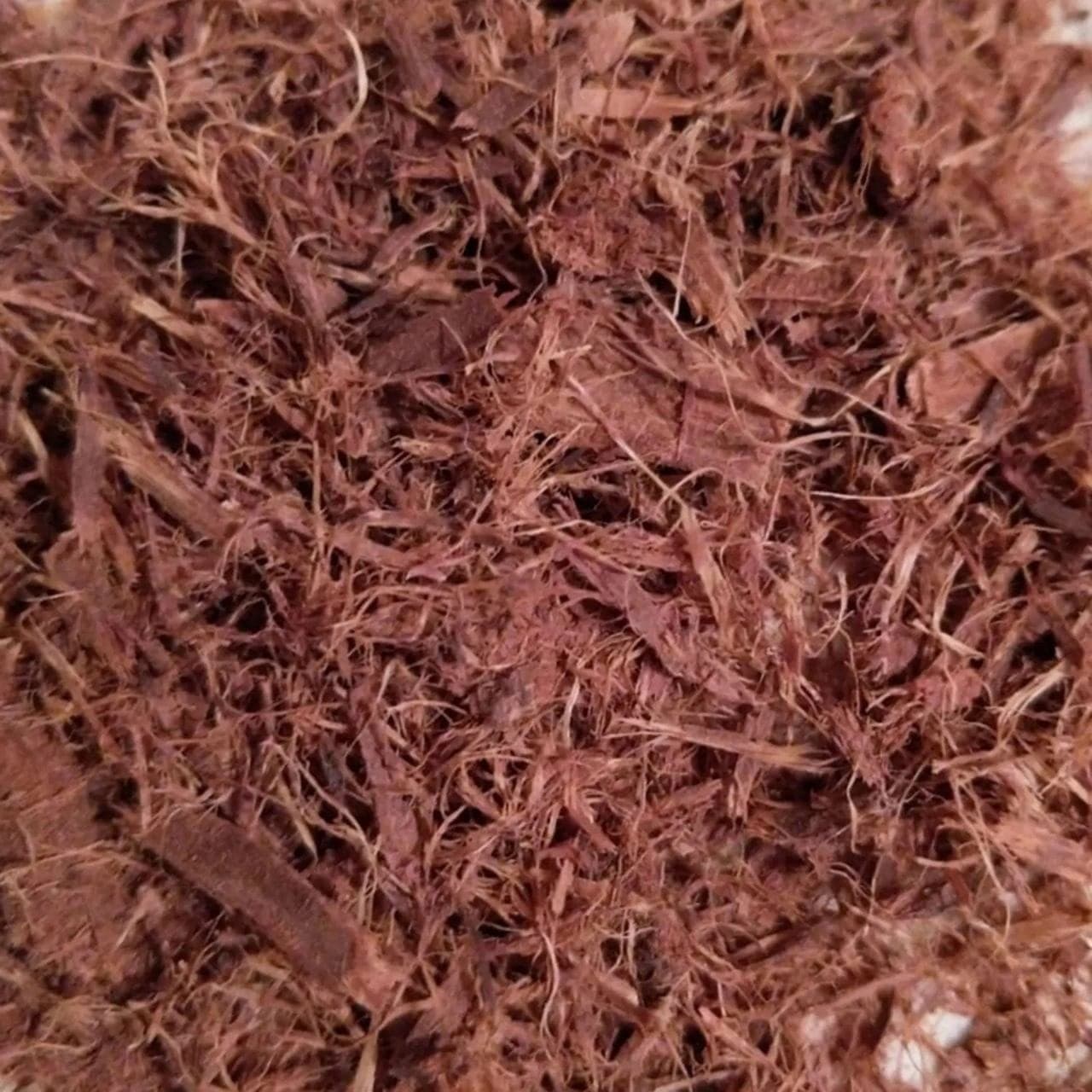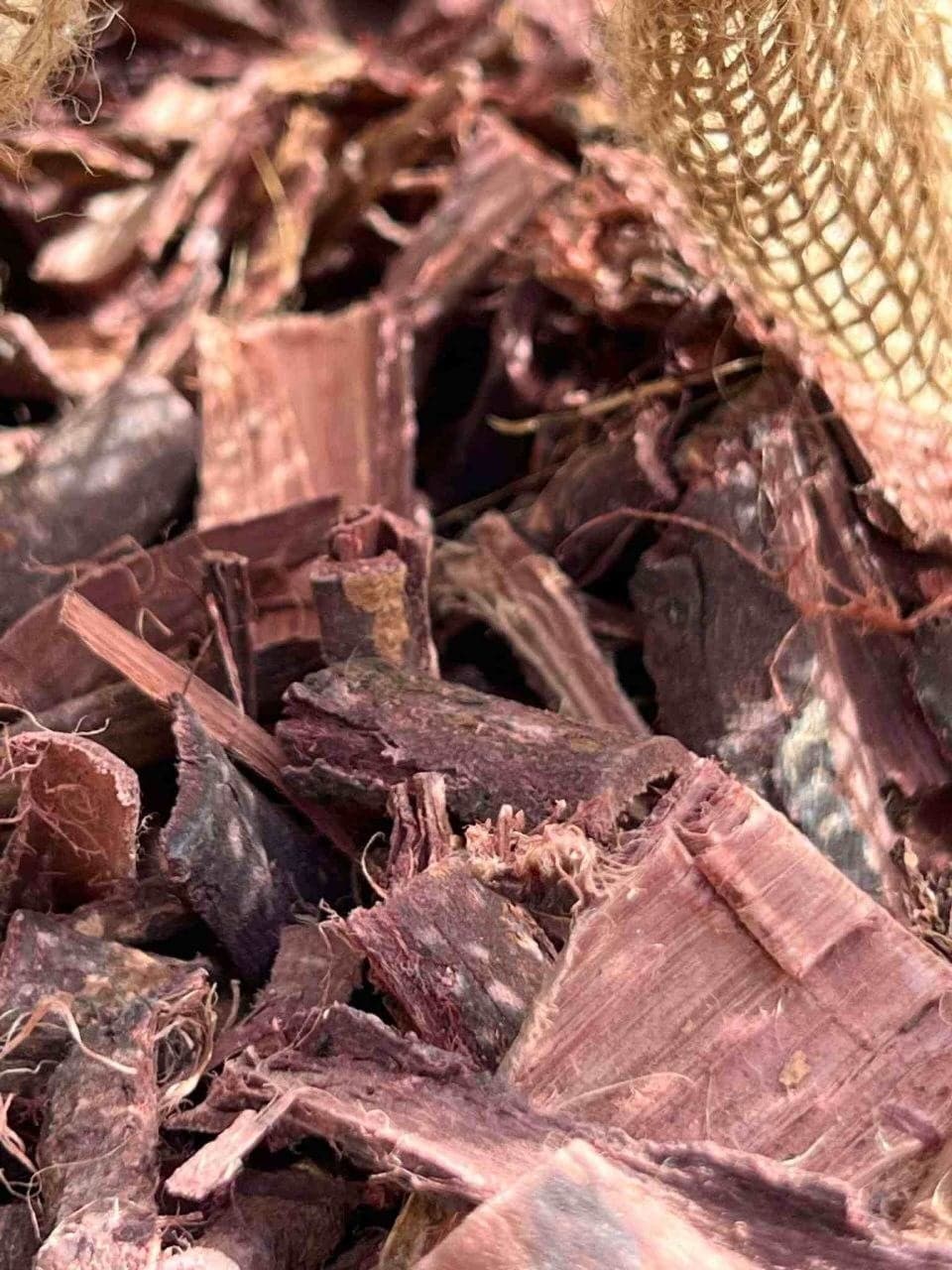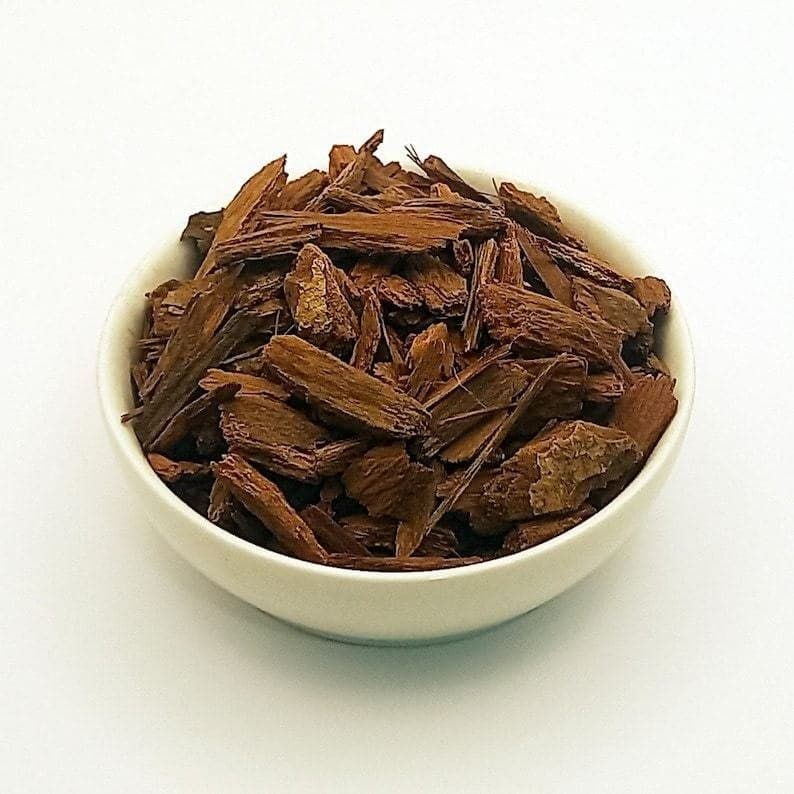
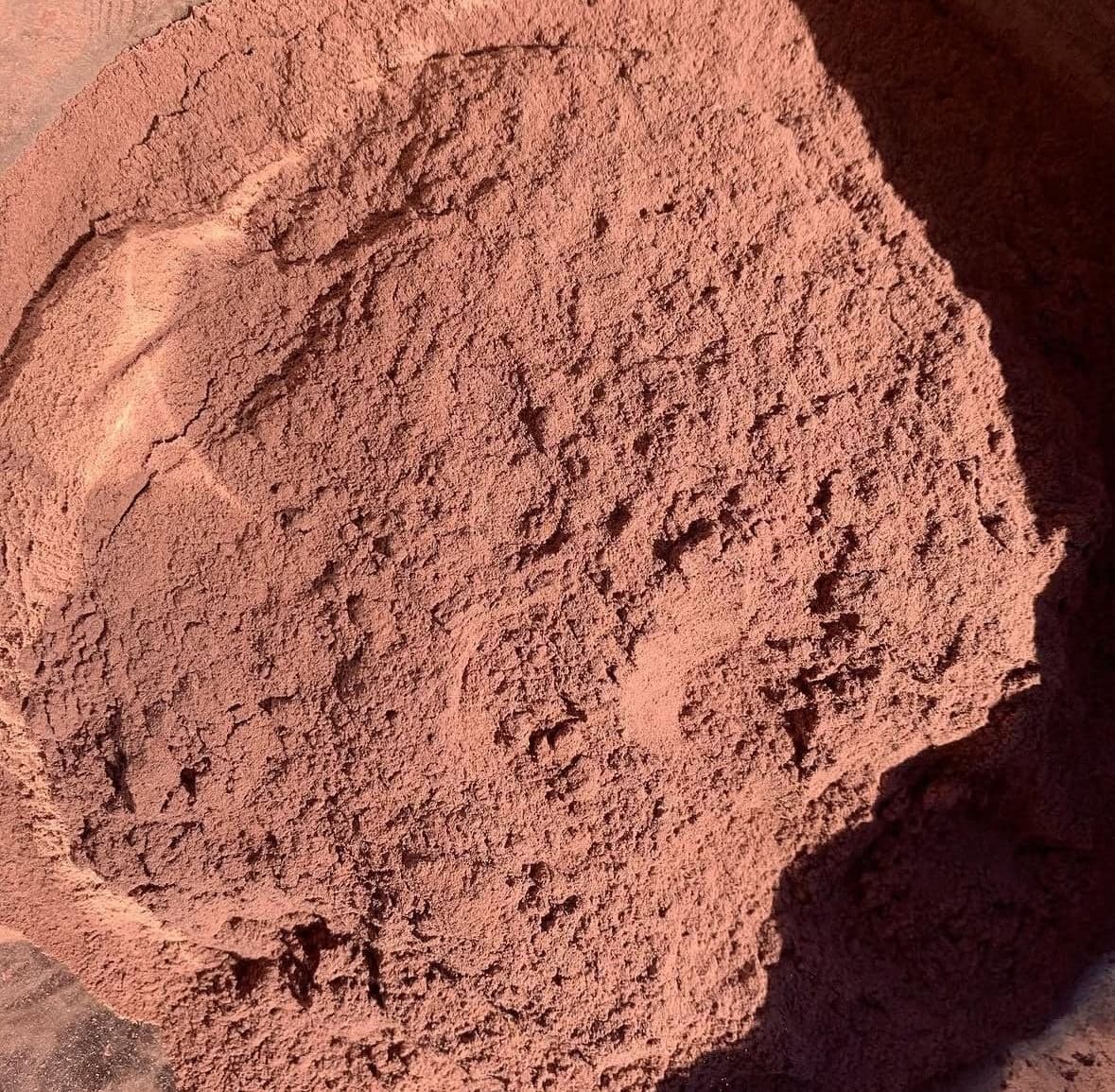
Powdered Mimosa Hostilis Root
Botanical use only
$37.501/4 lb
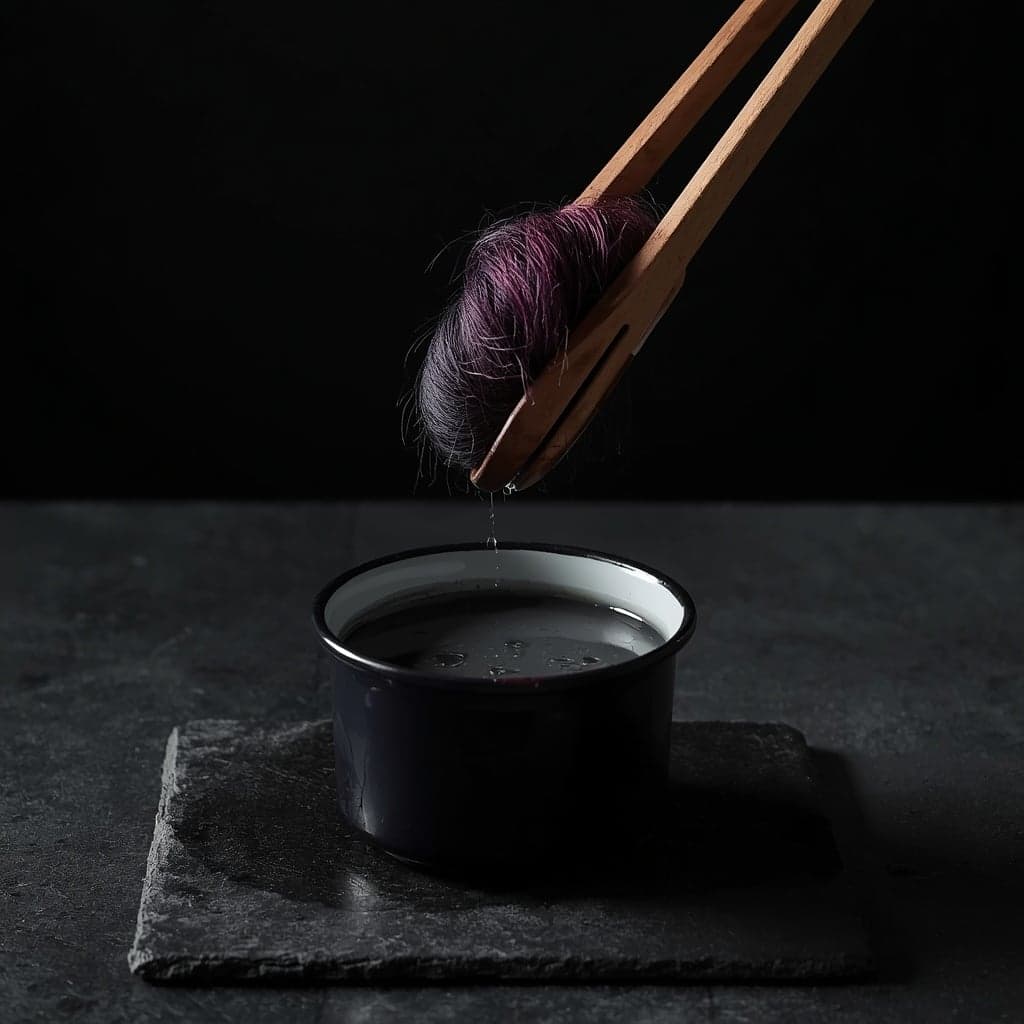
A weak iron after-bath darkens bark colour towards plum, slate and charcoal. Dyers call it saddening. One to two per cent of the fibre weight is plenty; more leaves wool wiry and weakened, and that does not recover. Use a dedicated pot, dip briefly, lift early, and rinse thoroughly.
Editorial Team · Compliance and product research · Updated
Iron is the most dramatic tool a natural dyer has and the easiest to ruin work with. Used lightly it turns a pleasant plum into something with real depth and a slightly antique quality. Used heavily it turns good wool into something that feels like wire and has lost strength it will not get back.
The whole skill is in restraint, and restraint is easier when you understand what is actually happening.
Iron reacts with tannins, and tannin is precisely what this bark is rich in. The products of that reaction are dark — it is the same chemistry behind traditional iron-gall ink, which is why medieval manuscripts are written in a colour that started as oak galls and iron.
On a dyed fibre the effect is to darken and grey everything at once: dusty rose goes to plum, plum goes to slate, brown goes to charcoal. The old English word for it is *saddening*, which describes both the colour and the mood rather well.
Ferrous sulfate at 1 to 2% of the dry fibre weight. For a hundred grams of wool that is one to two grams. It is a very small quantity and it is meant to be.
Plenty of experienced dyers work weaker still — half a per cent, dipped for longer — precisely because a weak bath gives you time to watch and stop. Almost nobody who knows this material works stronger than two per cent.
Dissolve it fully in hot water in a jug before it goes anywhere near the pot, for exactly the reason undissolved alum causes patches.
1. Dye and rinse first. Iron is an after-bath, not an additive to the dye pot.
2. Dissolve the iron in a jug of hot water.
3. Add it to a separate pot of warm water — enough that the fibre moves freely.
4. Put the wet, dyed fibre in and move it gently and continuously.
5. Watch it. The change begins within a minute and keeps going.
6. Lift it out while it still looks lighter than you want. It reads darker dry, and it continues to develop for a few seconds after it leaves the bath.
7. Rinse thoroughly, wash once with a pH-neutral detergent, rinse again.
The single most useful habit is to have a bowl of clean water beside the pot so you can stop the process the instant it looks right.
Iron contaminates, and it contaminates at levels far below what you would deliberately add. A pot that has held an iron bath will subtly sadden every colour made in it afterwards, however well it has been scrubbed.
Buy a cheap stainless pan and dedicate it. Do the same for a spoon and a pair of tongs. This sounds fussy until the first time a clear rose comes out of a "clean" pot looking muddy and you spend a week blaming the bark.
Too much iron leaves wool harsh and brittle. The damage is structural, not cosmetic — the fibre itself is weakened, and a skein that feels wiry coming out of the bath will still feel wiry after washing, after drying, and after somebody has knitted a jumper from it.
There is no corrective step. If you are unsure, go weaker and dip twice: two short dips with a proper look between them will always beat one long one.
Rescuing a browned skein. A bath that got too hot gives dull brown, and that cannot be reversed. A short weak iron dip turns it into a genuine charcoal, which is a colour worth owning.
Extending a gradient. Take four skeins from successive baths, iron two of them lightly, and you have eight tones from one bag.
Leather. The reaction is even faster on material already full of tannin — see dyeing leather with tannin-rich bark, where a very weak wipe takes warm brown to near-black.
If you are also using pH, do pH first and iron last. Iron is the louder of the two and will flatten a careful pH shift. The reasoning is in pH as a colour control.
Iron needs tannin to work on, so the depth you can reach depends on how much colour is in the fibre to begin with. A skein dyed at a hundred per cent of its weight in bark takes iron far more dramatically than one dyed at thirty.
Any of the forms will do it — powder, shredded, stripped root — and sassafras reacts too, though we publish no figures for what it gives.
Do not pour iron baths onto growing ground, into a watercourse, or down a drain without checking. Metal salts are the part of this craft with a genuine environmental footprint, and local guidance varies. Find out what applies where you are and follow it.
Everything described here is raw botanical material sold for dyeing, soap making and craft work. It is not food, it is not a supplement, and it is not for human consumption. Nothing on this page is a recommendation to put any of it in or on a body.
Part of our guide: What Is Mimosa Hostilis Root Bark?
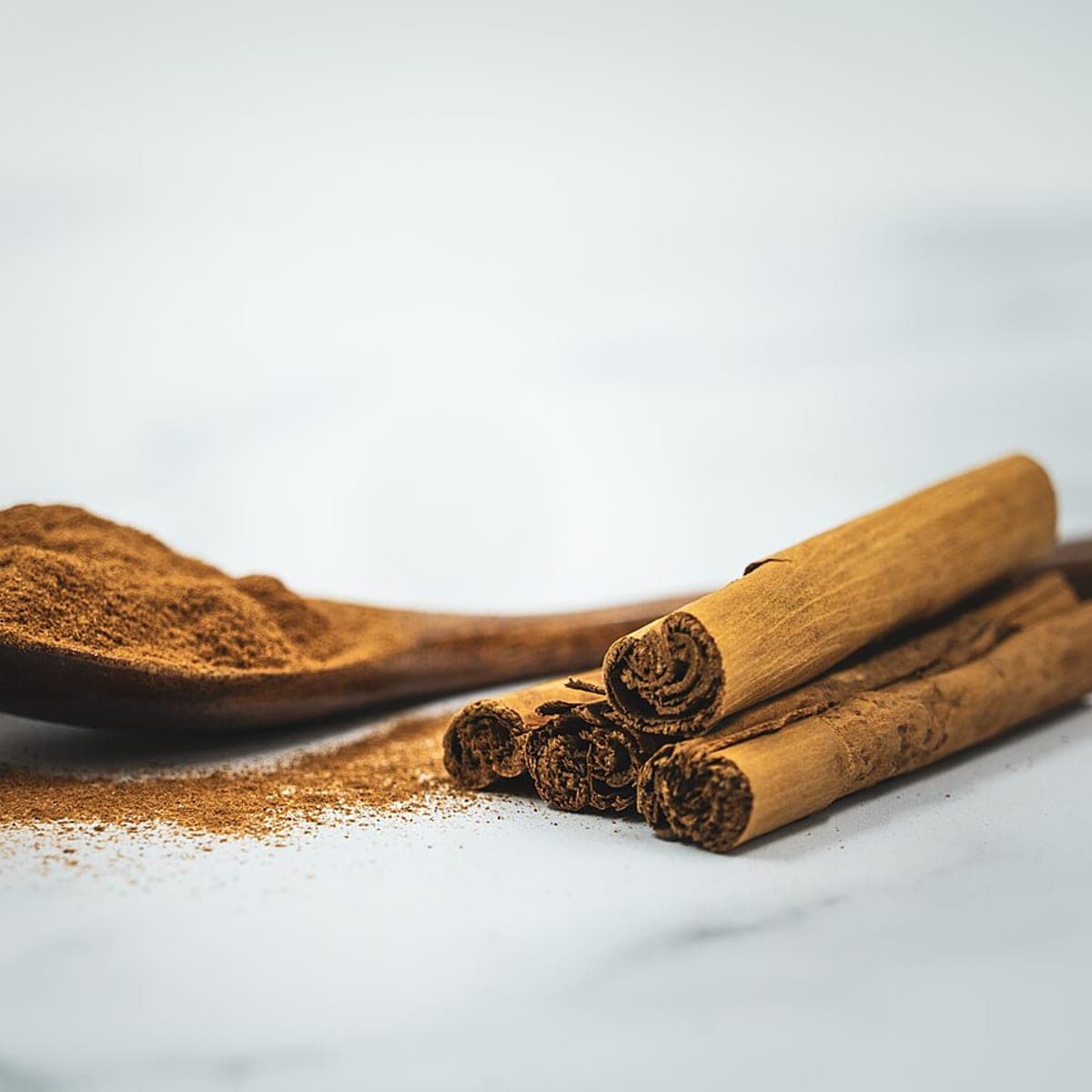
Weigh the fibre dry, then work every other quantity as a percentage of that weight. Fifty to eighty per cent of the fibre weight in bark is the everyday range for a full shade on wool. Thirty gives a tint, a hundred gives depth, and above about a hundred and twenty you are heating material that stays in the pot.
Vegetable-tanned leather takes bark colour well because it is already full of tannin. Chrome-tanned largely does not. Work in thin coats on clean, dry leather, let each dry fully, and condition afterwards. Test on an offcut from the same hide, because leather varies across a single skin.
Shredded bark is rarely spent after one bath. A second gives roughly half to two-thirds the depth, and a third gives a pale tint that is often the prettiest on silk. Powder gives almost everything on the first pass. Plan the order before you start, because you cannot climb back up the ladder.
Your cart is empty
Everything we sell is batch-tested, and we tell you what ships to your state before you add it.
Browse the shop