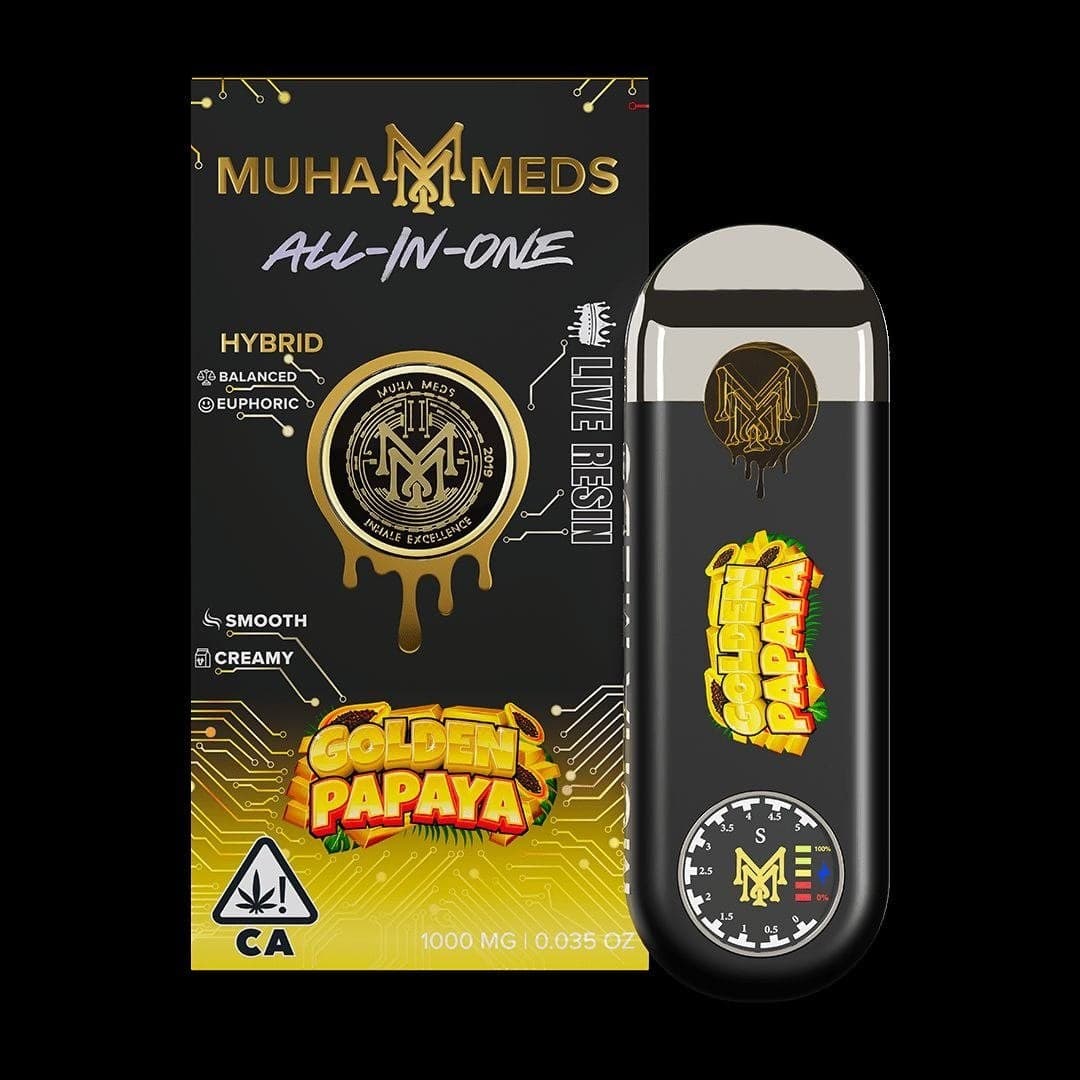
Muha Meds Golden Papaya
$24.99each
A batch code identifies one production run. It is the link between the object in your hand and a laboratory record, and it is the single most useful thing printed on packaging. A product name is not a batch. A code that leads nowhere is the clearest warning sign available to a buyer.
Editorial Team · Compliance and product research · Updated
The batch code is a short string on a box that most people never look at, and it is more useful than everything else printed there combined.
A batch — or lot — is one production run: one quantity of material, processed together, filled together, at one time.
Everything from that run shares a history. Anything from a different run does not, even if the brand, the strain name and the packaging are identical. That is the whole reason the code exists.
A certificate describes material as tested, on a date. It cannot describe a product name, because a product name covers every batch ever made under it.
So a seller offering "the COA for this product" is offering something that cannot exist in a meaningful form. What can exist is the record for batch ABC123, and the useful question is always phrased that way.
This is the same reason the botanical range on this site records a batch code too — bark is agricultural and tannin content is a property of the harvest, not of the species.
Three things:
1. Match the code on your packaging to a record.
2. Read that record: which laboratory, what date, which panels, what results. See what a contaminant panel covers.
3. Check the arithmetic, if potency figures are present — see total THC and how the number is worked out.
If a code cannot do the first of those, the other two are unreachable.
Any one of those is enough to stop. Together they are the counterfeit pattern described in spotting a counterfeit device.
The code is printed on the box, not on the device. Discard the box and you have discarded your only link to the record — and, if something is wrong with the product, your only means of raising it usefully.
Keep it at least until the device is finished. See storing devices.
Where a device holds two separate reservoirs filled from different runs, it may carry two codes — or one, if both chambers came from a single batch.
Check which. A single code on a two-chamber device is a statement that both came from one run. See dual-chamber devices explained.
Four products in the catalogue currently carry a batch code, and the rest do not. We do not print one that we cannot support, and we do not attach a record to a product it does not belong to.
Where a verified record exists, it belongs to a batch. Where none exists, the page says so by omission rather than by implication — which is why several listings such as Golden Papaya and Whole Melts 2G carry hardware facts and no composition figures.
The official certificate is issued to licensed resellers on provision of a licence. Everyone else receives the summary for their batch on request, against the code printed on the package. Both are real records; the difference is the level of documentation. See bulk and wholesale enquiries.
Not "do you have COAs". Ask: "can you send me the certificate for the batch code printed on this unit?"
A seller who can, will. A seller who sends a generic document, a record for a different code, or an image with no laboratory identified has answered a different question, and the difference is the entire point.
Sold to adults 21 and over. This article explains the subject in general. What any particular product contains, and in what quantity, comes from the certificate of analysis issued against the batch code on its packaging — not from an article, not from a product page, and not from anything printed on a box.
Laboratories separate a sample into its components and measure each one. Liquid chromatography keeps acids intact and reports THCA and delta-9 separately. Gas chromatography heats the sample, converting acids on the way through. Which method was used changes what the numbers mean.
Counterfeits in this category are common and increasingly well made. The reliable signals are a missing or unverifiable batch code, packaging that will not scan, a price far below the market, and a seller who cannot produce a certificate. Print quality and holograms are the easiest things to copy.
Potency is not a safety test. A full panel screens for heavy metals, pesticides, residual solvents, microbials and mycotoxins, each for a different reason. A certificate showing only cannabinoid percentages has answered the least important question and left the others untouched.
Your cart is empty
Everything we sell is batch-tested, and we tell you what ships to your state before you add it.
Browse the shop