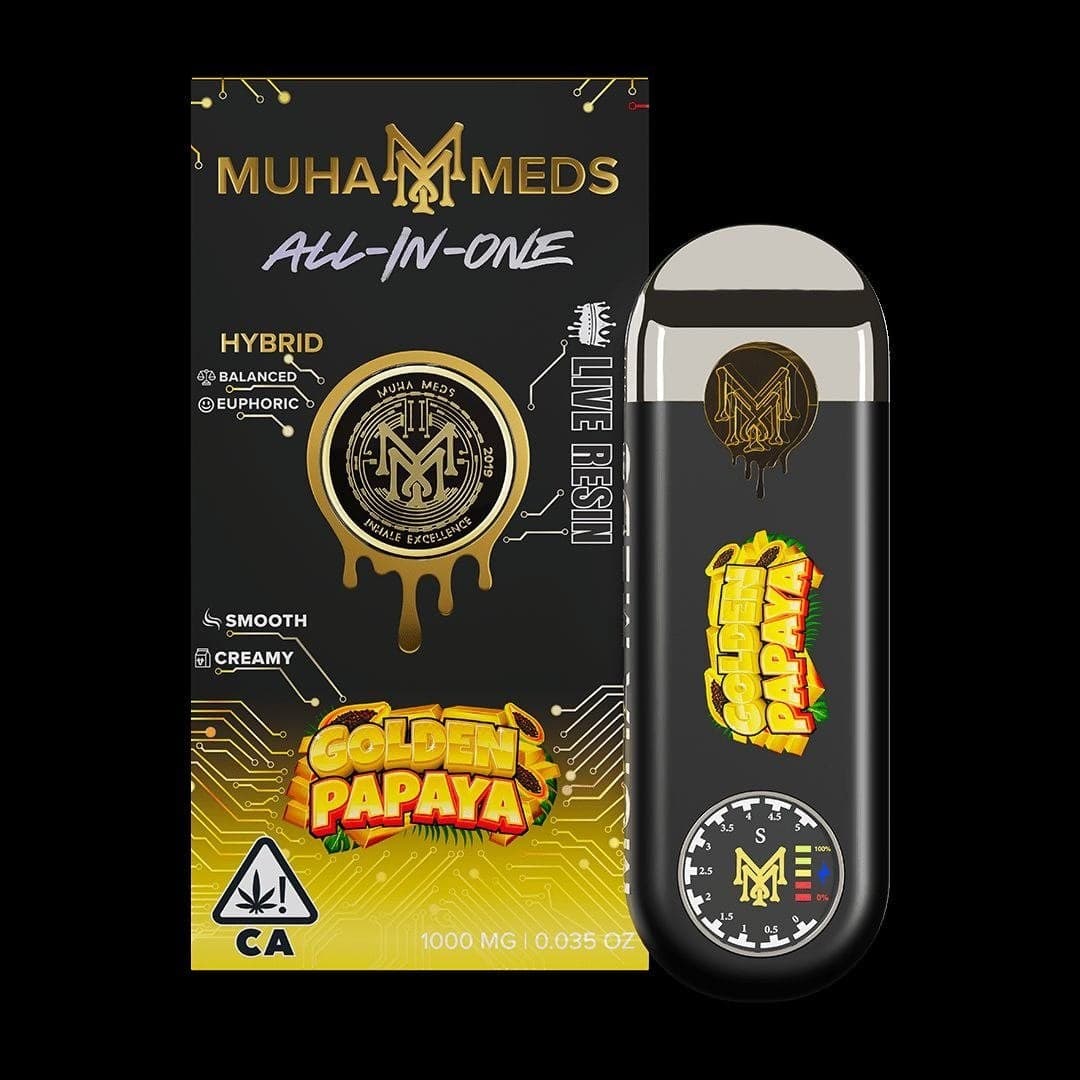
Muha Meds Golden Papaya
$24.99each
Potency is not a safety test. A full panel screens for heavy metals, pesticides, residual solvents, microbials and mycotoxins, each for a different reason. A certificate showing only cannabinoid percentages has answered the least important question and left the others untouched.
Editorial Team · Compliance and product research · Updated
The most common gap in a certificate is not a wrong number. It is a missing panel.
A document that reports cannabinoid percentages and nothing else looks complete, satisfies most buyers, and has said nothing whatsoever about whether the material is clean. Here is what a full panel actually screens for, and why each part is there.
Usually four: lead, arsenic, cadmium and mercury.
Two routes bring them in. Cannabis is a known accumulator — it draws metals out of soil and concentrates them in plant tissue, which is why growing conditions matter. And hardware itself can contribute: cheap heating elements, solder and low-grade alloys can shed into oil, especially when hot.
That second route is why this panel matters in a device specifically, and not only in plant material. It is also one more reason counterfeit hardware is a contaminant question rather than a trademark one.
A full pesticide screen covers dozens of analytes — commonly sixty or more.
The number matters. A panel testing for eight compounds and a panel testing for sixty-six are both "pesticide tested", and they are not comparable. When comparing certificates, look at how many analytes were screened rather than at whether the word appears.
Relevant to anything produced with a solvent-based process — which includes most concentrates other than rosin, as described in live resin, distillate, rosin and liquid diamonds.
The screen looks for what remains after processing: butane, propane, ethanol, hexane and others. A well-run process removes them; the panel is what demonstrates it rather than asserting it.
Material made without solvent has nothing to find here, which is a genuine argument for rosin — but the panel should still be run and reported rather than skipped on the strength of a process claim.
Typically E. coli, salmonella, and total yeast and mould counts, sometimes with Aspergillus species called out separately.
This matters most for plant material and for anything stored damp or warm. It is the panel most often omitted from concentrate certificates on the argument that processing removes the risk.
Compounds produced by moulds rather than the moulds themselves: aflatoxins B1, B2, G1 and G2, and ochratoxin A.
They are heat-stable, which is the point. A process that kills mould does not necessarily remove what the mould already produced, so a microbial screen and a mycotoxin screen answer different questions and neither substitutes for the other.
Reported for plant material rather than concentrates. Water activity describes how much moisture is available to support microbial growth, which is a better predictor of shelf stability than moisture content alone.
If you see both on a certificate, that is a sign of a thorough panel rather than a minimal one.
Because they are cheaper, faster, and satisfy the question most buyers ask.
A cannabinoid assay alone costs a fraction of a full panel. A seller who wants a document rather than an assurance will buy the cheap one, and it will look perfectly convincing.
The guide to certificates of analysis walks through a full record.
Publishing a batch here requires a contaminant panel. The admin refuses to publish a certificate that carries potency alone, because a document that looks complete and is not is worse than no document — it converts an open question into a false answer.
Where no verified record exists for a product, the page says nothing rather than implying one. That is why several listings carry hardware facts and no composition figures at all.
Sold to adults 21 and over. This article explains the subject in general. What any particular product contains, and in what quantity, comes from the certificate of analysis issued against the batch code on its packaging — not from an article, not from a product page, and not from anything printed on a box.
Laboratories separate a sample into its components and measure each one. Liquid chromatography keeps acids intact and reports THCA and delta-9 separately. Gas chromatography heats the sample, converting acids on the way through. Which method was used changes what the numbers mean.
Counterfeits in this category are common and increasingly well made. The reliable signals are a missing or unverifiable batch code, packaging that will not scan, a price far below the market, and a seller who cannot produce a certificate. Print quality and holograms are the easiest things to copy.
A batch code identifies one production run. It is the link between the object in your hand and a laboratory record, and it is the single most useful thing printed on packaging. A product name is not a batch. A code that leads nowhere is the clearest warning sign available to a buyer.
Your cart is empty
Everything we sell is batch-tested, and we tell you what ships to your state before you add it.
Browse the shop