Powdered Mimosa Hostilis Root
Botanical use only
$37.501/4 lb
Your cart is empty
Everything we sell is batch-tested, and we tell you what ships to your state before you add it.
Browse the shop
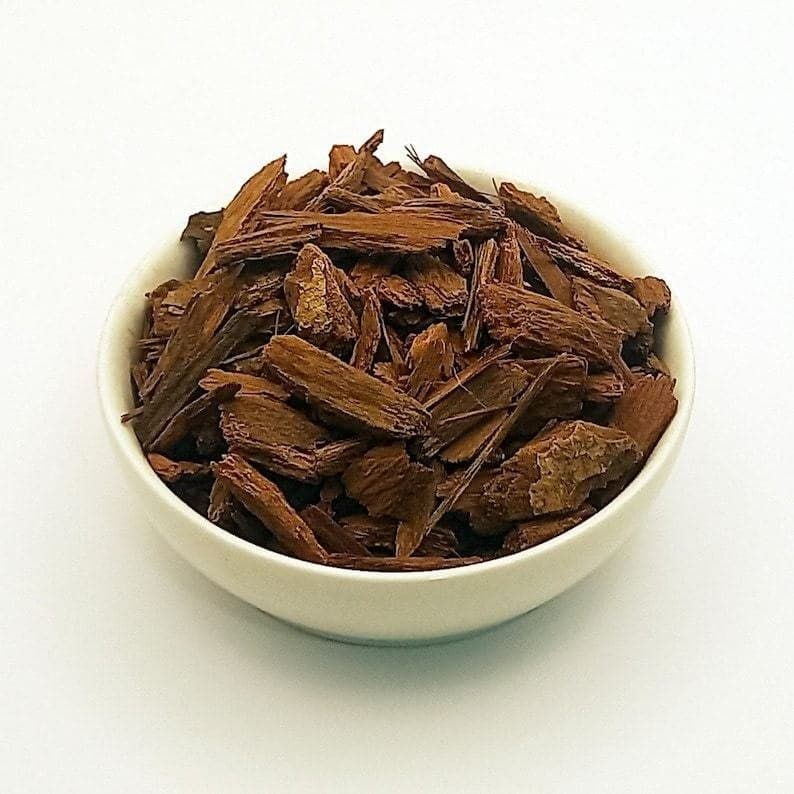
Sassafras albidum is a laurel native to eastern North America, unrelated to the Brazilian mimosa it sits beside on the shelf. Its bark has a long history of use as a dye. Federal rules prohibit safrole, oil of sassafras and sassafras bark intended for flavouring from human food, so it is sold here for dye and craft work only.
Editorial Team · Compliance and product research · Updated
Sassafras is shelved next to mimosa root bark, sold in the same sizes and priced by the same pound, which leads a lot of people to assume it is a fourth cut of the same plant. It is not. Different family, different genus, different hemisphere.
That matters practically, and it matters legally, and both are worth knowing before you buy.
*Sassafras albidum* is a deciduous tree in the laurel family, Lauraceae — the same family as bay and cinnamon. It is native to eastern North America, growing from southern Maine and southern Ontario west to Iowa and south to central Florida and eastern Texas.
It is one of the easiest trees in that range to identify, because a single specimen carries three different leaf shapes at once: unlobed ovals, two-lobed leaves shaped like a mitten, and three-lobed leaves. Very few trees do that, and once you have seen it you do not forget it.
*Mimosa tenuiflora*, also catalogued as *Mimosa hostilis*, is a thorny legume in Fabaceae, native to northeastern Brazil and parts of southern Mexico. A legume from South America and a laurel from North America are not variants of each other in any useful sense.
The practical consequence is that a recipe written for mimosa is a starting point for sassafras and not a specification. Colour behaviour, tannin content and handling are properties of a species — and, within a species, of a batch.
Bark from the tree has a long history of use as a dye in North America. That is documented and we are comfortable saying it.
What we do not publish is a shade range, a tannin percentage or a recommended ratio, because we hold no test of what this particular material gives. A number nobody measured is not a specification, and putting one on a page would make every subsequent batch a promise we cannot keep.
The honest approach is the one experienced dyers take with any unfamiliar bark. Cold soak a small quantity, warm it gently, dye a test strip of properly mordanted wool, dry it fully, and record what you got against the batch code. Build your own reference rather than trusting somebody else's.
Federal rules at 21 CFR 189.180 prohibit food containing added safrole, oil of sassafras, isosafrole or dihydrosafrole. The same rule extends to sassafras bark where it is intended as a vehicle for imparting those substances to another food.
That is why Sassafras Root Bark is offered here for dye and craft work only, and why it carries the same terms as the rest of the botanical range. It is not sold as a flavouring, a beverage ingredient, or a food of any kind, and nothing on this site describes it as one.
We would rather state that plainly than let the shelf position imply otherwise.
Approach it as you would any tannin-rich bark you have not used before.
The same four conditions as everything else: sealed, dry, out of direct light, away from temperature swings. Damp is what spoils bark, and caked material never disperses properly afterwards.
Label the bag with its batch code the day it arrives. Bark from different harvests is not interchangeable, and with a material you are still learning, the code is the only way to connect a result to its source.
Keep them clearly separated and clearly labelled, including in your notes. Two reddish barks in unlabelled bags are indistinguishable at a glance, and a dye journal that says only "bark" is a journal that will mislead you in six months.
The mimosa range — powder, shredded, stripped root — is covered in powder, shredded or stripped, and the background to the species is in the guide to what mimosa hostilis root bark is.
Everything described here is raw botanical material sold for dyeing, soap making and craft work. It is not food, it is not a supplement, and it is not for human consumption. Nothing on this page is a recommendation to put any of it in or on a body.
Part of our guide: What Is Mimosa Hostilis Root Bark?
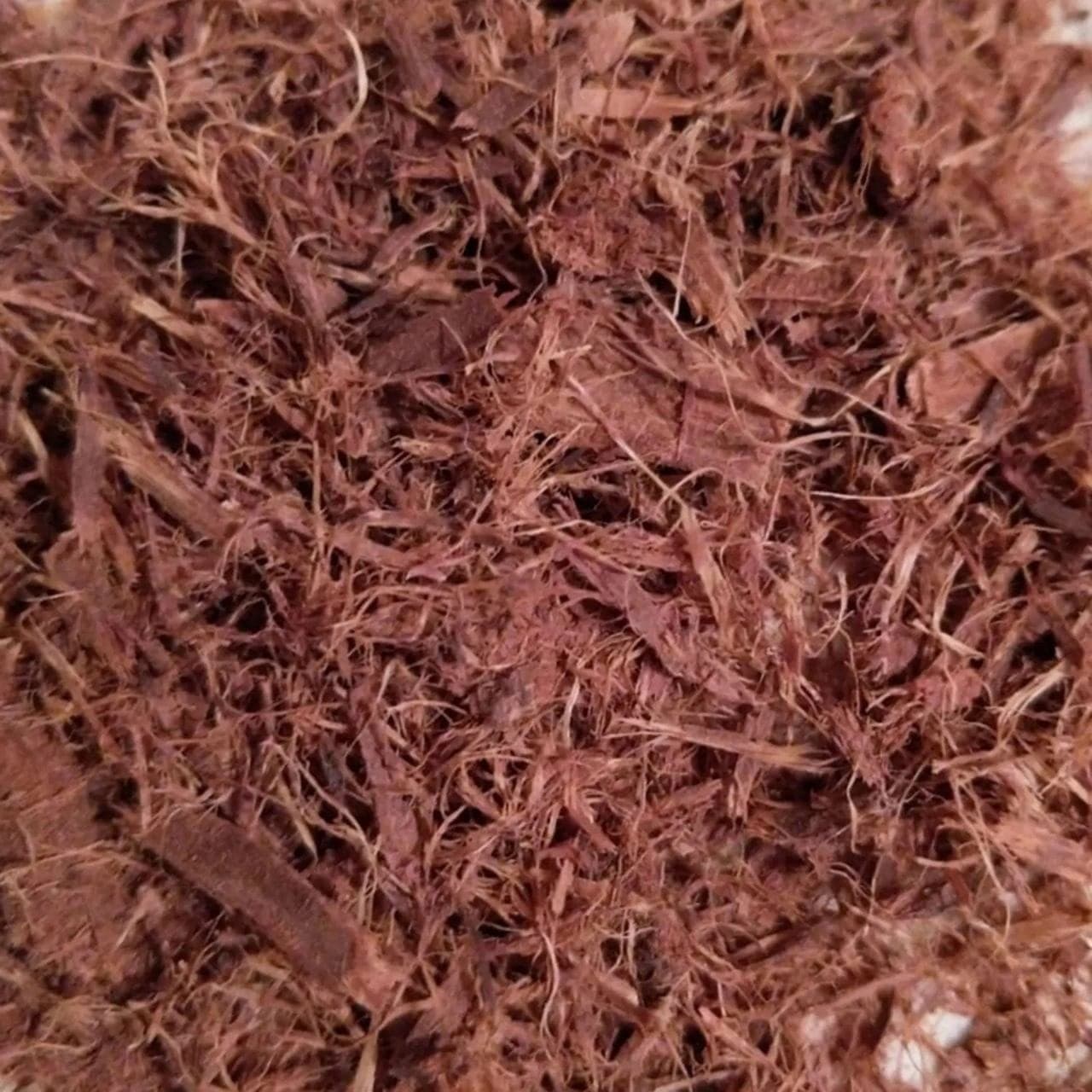
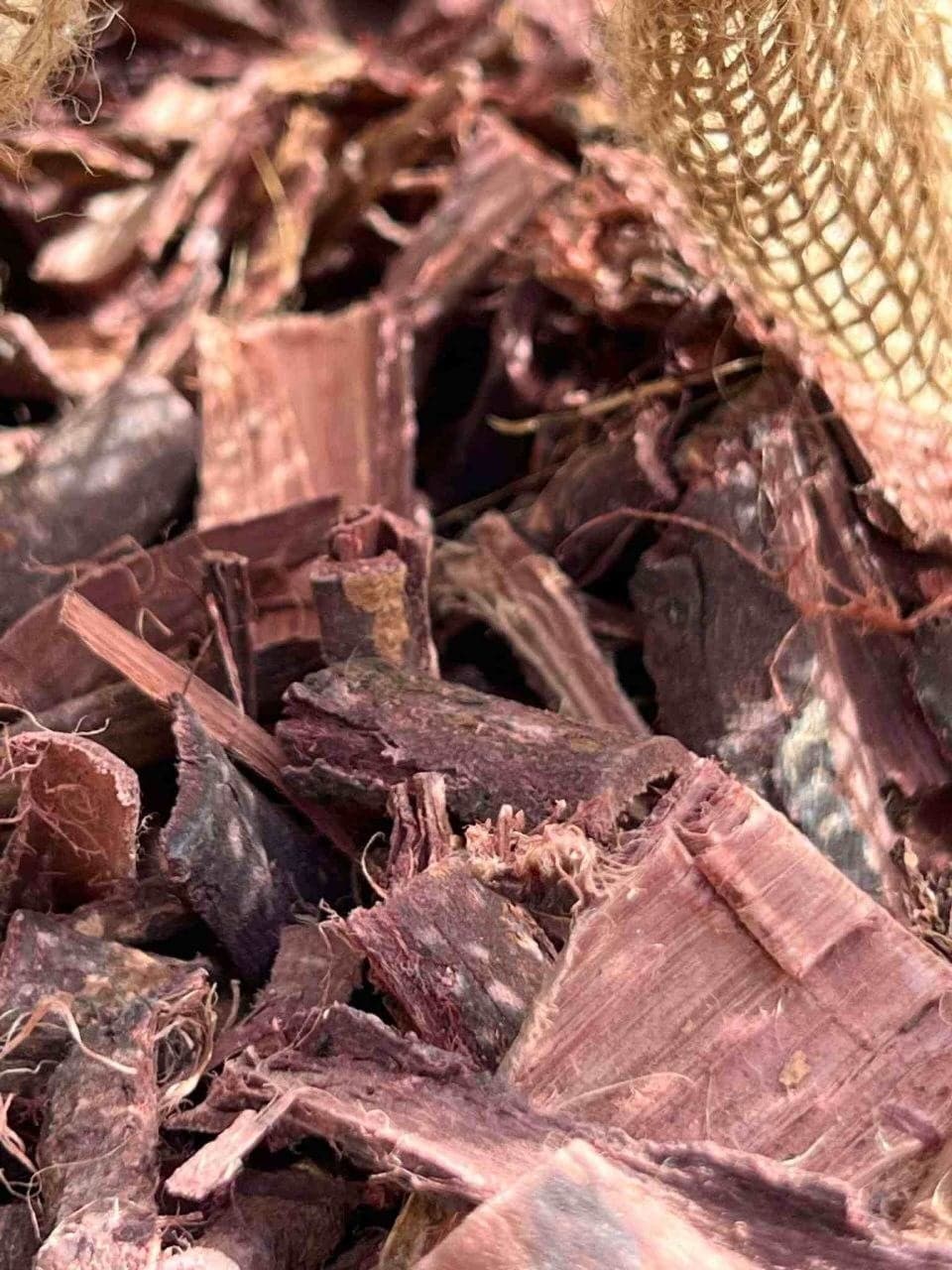
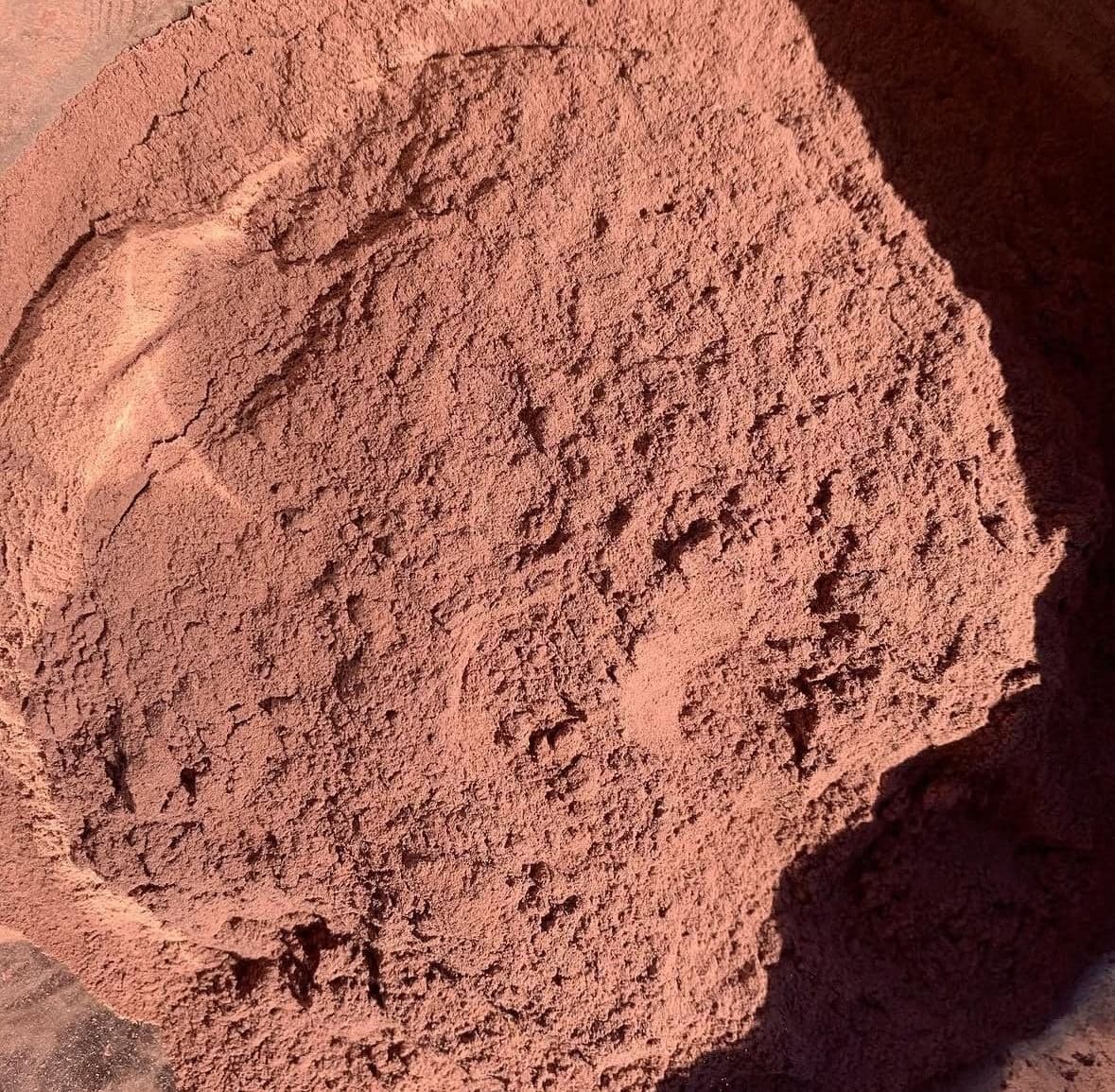
Powder gives up colour fastest and suits small test skeins and soap. Shredded bark lifts cleanly out of the pot and gives a usable second bath. Stripped roots keep longest and let you mill your own. The choice is about handling and storage, not about what colour you can reach.
A quarter pound covers a test plus a small project. A full pound covers a garment with material left for a second bath. Buy the larger size once you have settled on a form, and buy enough from one batch to finish anything that has to match, because bark from two harvests will not.
Milling multiplies surface area, and surface area governs how fast colour moves from plant material into water. Powder gives a full bath in an hour where coarse material wants three, gives almost everything on the first pass, and floats instead of settling. Every practical difference follows from particle size.