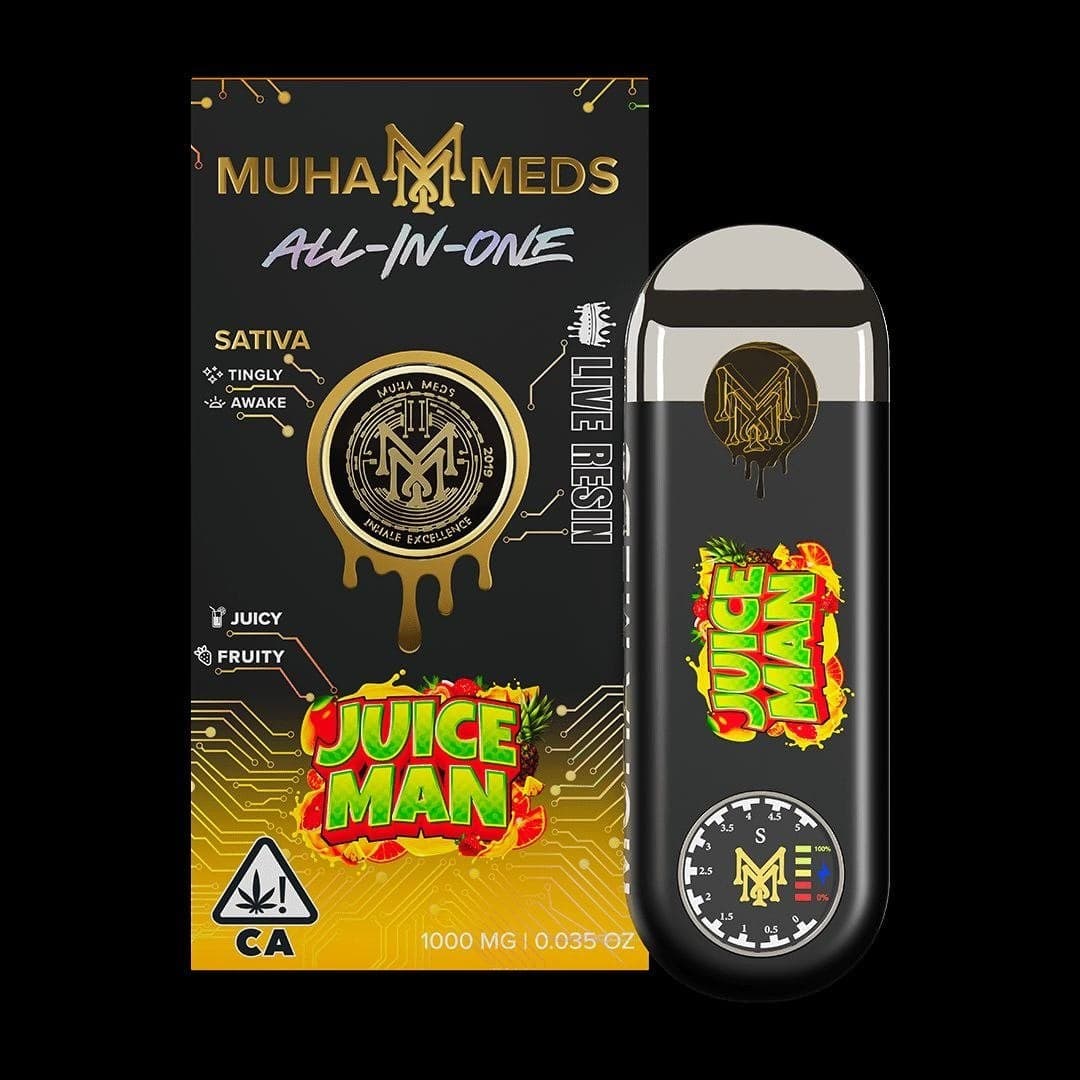
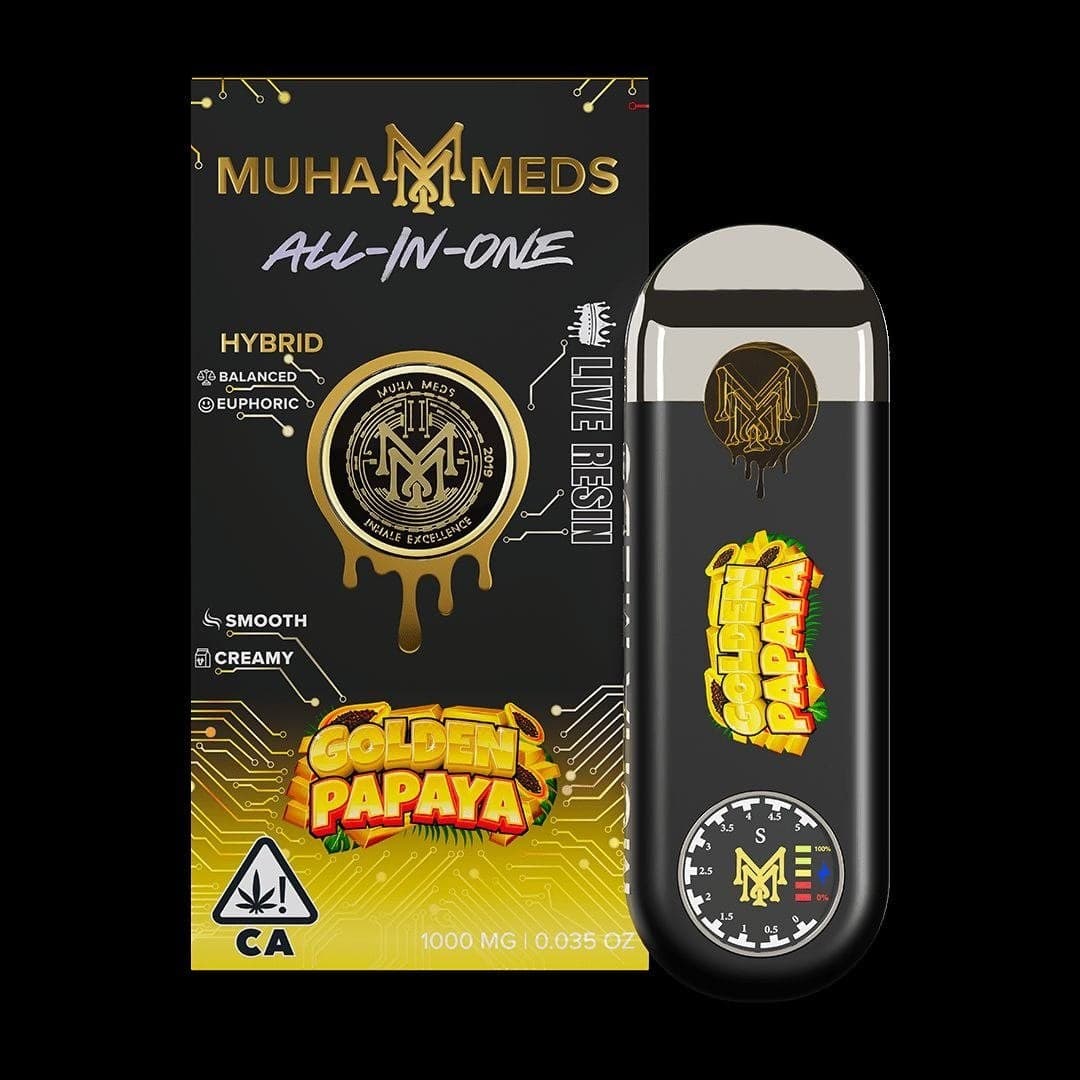
Muha Meds Golden Papaya
$24.99each
Your cart is empty
Everything we sell is batch-tested, and we tell you what ships to your state before you add it.
Browse the shop
A certificate usually lists a dozen cannabinoids beyond THC. CBG is the precursor everything else is built from, CBN is a degradation product that rises with age and heat, and CBD is the most abundant of the non-THC compounds. Reading the whole list tells you more about a batch than the headline figure.
Editorial Team · Compliance and product research · Updated
Most people read one line on a certificate and ignore the rest. The rest is where the information is — the minor cannabinoids describe how material was grown, how it was processed, and how old it is.
Here is what the common ones are.
Cannabigerolic acid is the precursor. The plant makes CBGA first, and enzymes then convert it into the acidic forms of the other cannabinoids — THCA, CBDA, CBCA.
Because it is consumed in making the others, mature material usually shows very little of it. A high CBG or CBGA figure often indicates material harvested early, or a cultivar bred specifically to accumulate it rather than convert it.
Cannabidiol is the most abundant non-THC cannabinoid in most material, and it follows exactly the same acid-and-neutral pattern described in what THCA is: the plant produces CBDA, and heat converts it to CBD by removing a carboxyl group.
A certificate reporting both separately is doing its job properly. One reporting only "CBD" has either decarboxylated the sample before testing or combined the figures, and it should say which.
Cannabinol is not really produced by the plant in quantity. It is what THC becomes as it degrades — oxidation over time, accelerated by heat, light and air.
That makes it the single most useful line on a certificate for judging age and storage. A batch showing a noticeably elevated CBN figure relative to its THC has been sitting somewhere warm, bright or airy, or has simply been sitting a long time.
It is also why a test date matters as much as the numbers around it — see why a test date matters and what happens to oil in heat, light and air.
CBC — cannabichromene, produced by the same branching pathway from CBGA. Usually present at low levels.
THCV — tetrahydrocannabivarin, structurally similar to THC with a shorter side chain. Some cultivars accumulate it; most show traces.
CBDV, CBGV — the same "varin" variation applied to CBD and CBG.
Their presence at low levels is normal and expected. Their absence from a panel usually means the laboratory did not test for them rather than that they were not there, which is a distinction worth noticing.
Certificates frequently report total cannabinoids: the sum of everything measured.
It tells you the material was cannabinoid-rich in general. It says nothing specific about THC, and reading one as the other is a common and consequential mistake — the arithmetic that separates them is in total THC and how the number is worked out.
When a panel reports "ND" or "not detected", it means below the laboratory's limit of quantitation — the smallest amount that instrument and method can reliably measure.
It does not mean zero. A different laboratory with a lower limit might report a small number for the same sample. This is why a certificate should state its limits, and why comparing two certificates from different laboratories requires reading the method as well as the results.
This article describes what these compounds are and where they come from in the plant. It makes no claim about what any of them does to a person, because that is not a claim this site makes about anything.
Anyone attaching outcomes to a minor cannabinoid on a product page is making a claim they cannot support, and the contaminant panels are a far better use of your attention.
Sold to adults 21 and over. This article explains the subject in general. What any particular product contains, and in what quantity, comes from the certificate of analysis issued against the batch code on its packaging — not from an article, not from a product page, and not from anything printed on a box.
Heat accelerates conversion and thins oil until it floods a coil. Light drives the same reactions faster. Air oxidises THC into CBN. All three are why a device kept in a car performs differently from one kept in a drawer, and why opaque packaging is not a styling decision.
THCA is the acidic form the plant actually produces. It carries an extra carboxyl group, and applying heat removes that group as carbon dioxide, converting it to delta-9 THC. The conversion is why laboratories report two different numbers and why a label and a test can appear to disagree.
These four words describe how an oil was produced, not how strong it is. Live resin starts from fresh-frozen material. Distillate is refined to a near-single compound. Rosin is made with heat and pressure alone. Liquid diamonds pair crystalline material with a terpene-rich liquid.