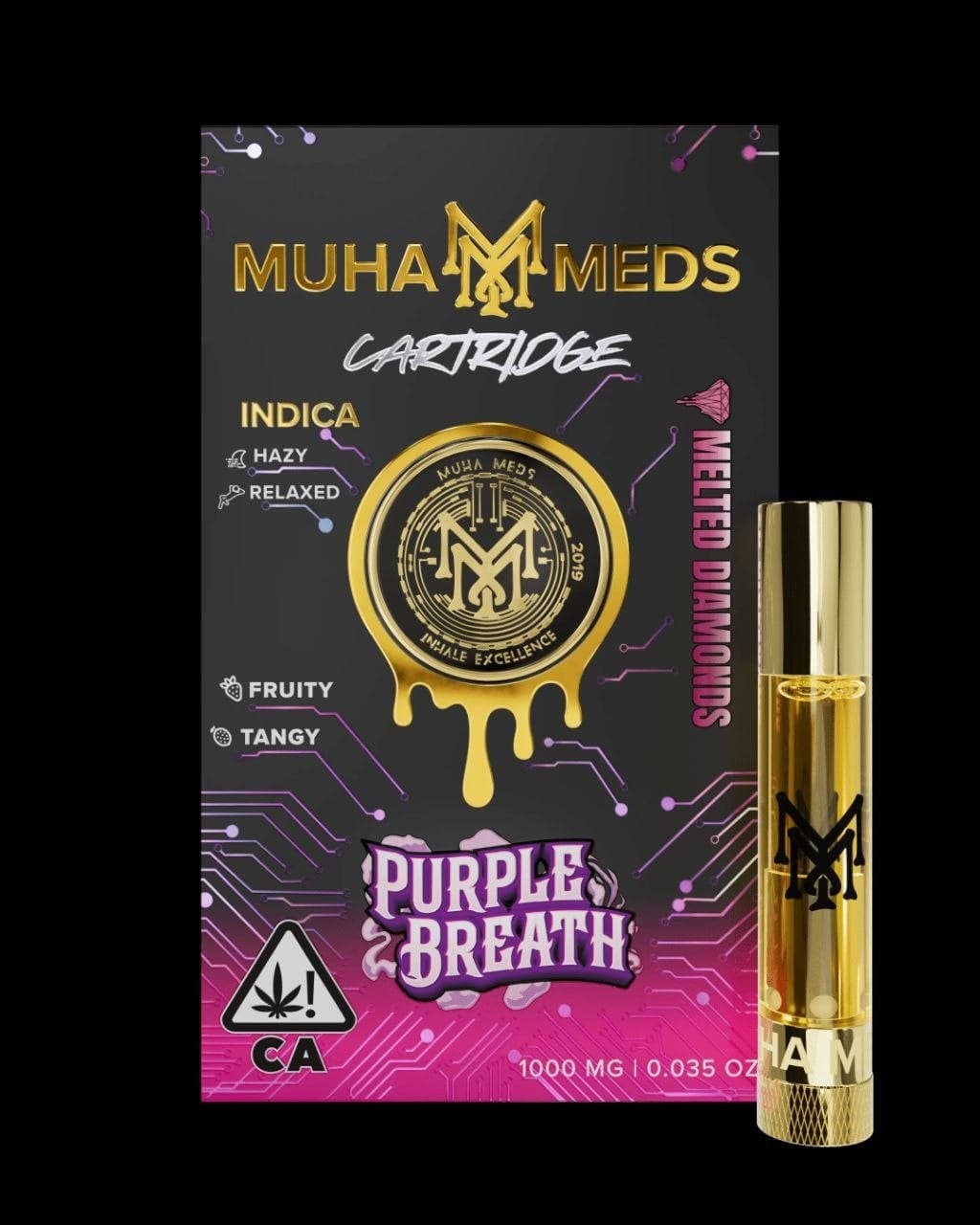
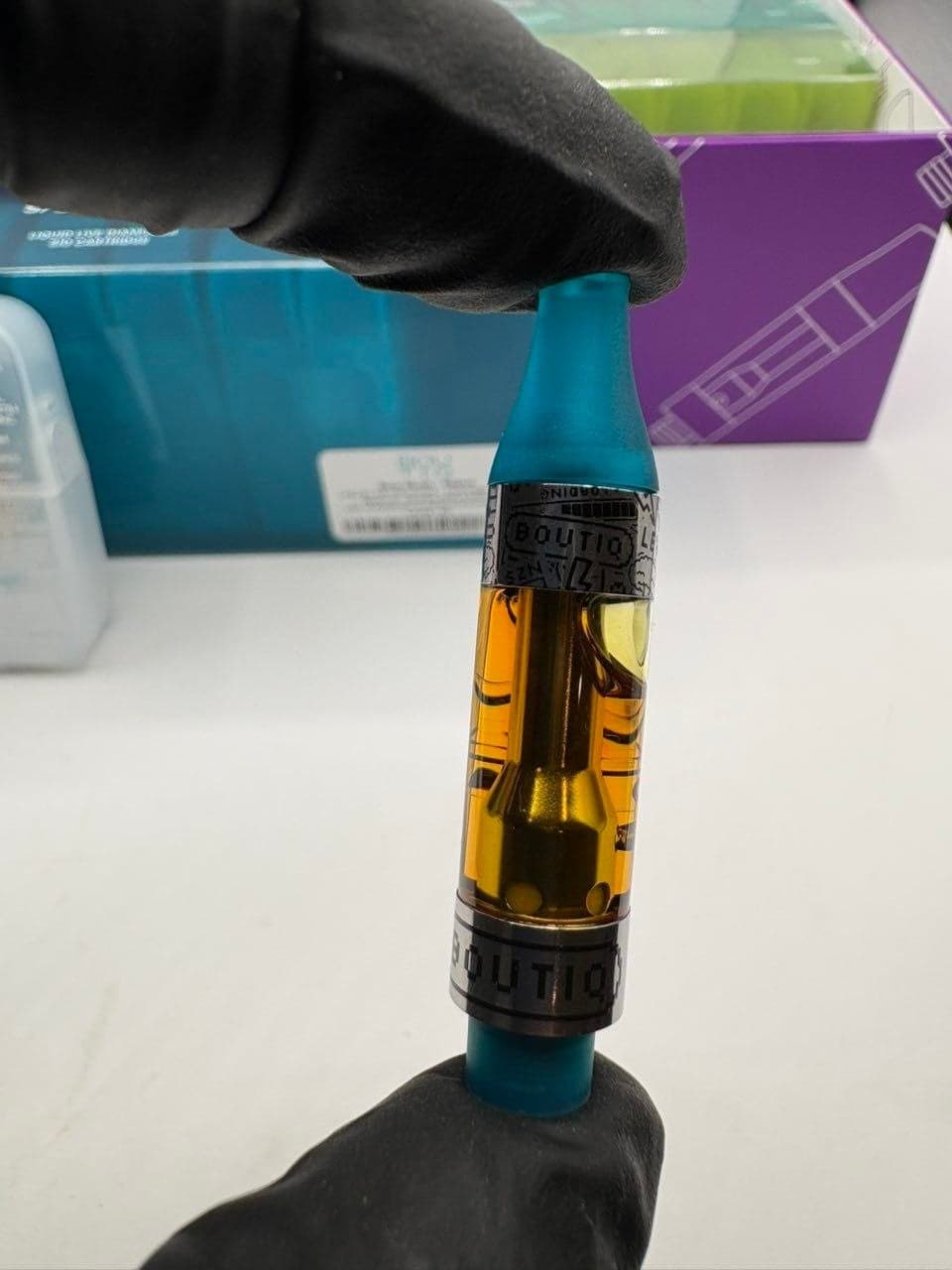
Boutiq 1G Screw-On Cartridge
$12each
Your cart is empty
Everything we sell is batch-tested, and we tell you what ships to your state before you add it.
Browse the shop
A 510 cartridge is a small tank with a threaded base that screws onto a separate battery. The number is a thread specification, not a brand or a capacity. It is the most widely shared fitting in the category, which is why a cartridge from one maker usually fits a battery from another.
Editorial Team · Compliance and product research · Updated
If you have bought anything in this category you have met the number 510, usually without being told what it means. It is worth five minutes, because it explains why some things fit together and some do not, and because it is the difference between buying a complete device and buying half of one.
510 describes a screw thread: ten threads, on a post five millimetres across. That is the whole specification. It is not a manufacturer, a capacity, a quality grade or a generation.
It became the common fitting largely by accident — one early design was widely copied, and the copies were compatible with each other. Nobody standardised it deliberately, which is why you will occasionally meet a cartridge that is nominally 510 and still sits badly on a particular battery.
A cartridge is a tank and a heating element, and nothing else. It holds oil, it has a mouthpiece at the top and a threaded connection at the bottom, and somewhere inside is a coil that heats when current reaches it.
What it does not have is a battery. That is the single most important thing to understand before ordering one, and the most common source of disappointment: a cartridge on its own will do nothing at all until it is screwed onto a power source you already own.
The Boutiq 1G Screw-On Cartridge is a cartridge in exactly this sense. So are several of the Muha Meds listings — Purple Breath, White Raspberry and Toro Milk Runtz are 510-thread cartridges rather than all-in-one devices, which is covered in disposable or cartridge.
Three parts matter.
The reservoir holds the oil. Capacity is quoted in grams rather than millilitres, usually 0.5g or 1g.
The coil is the heating element. Most modern cartridges use a ceramic core rather than a wick and wire, which is why so many listings mention ceramic — there is more on what that changes in ceramic coils and why hardware matters.
The intake ports are small holes that let oil reach the coil. Their size is a design decision with real consequences: too small and a thick oil cannot feed fast enough, which is one of the causes covered in why a cartridge clogs.
Older cartridges had a post in the middle of the base that the oil had to be poured around. Postless designs removed it, filling from the base through the same channels the oil later travels.
The practical differences are that postless cartridges tend to be easier to fill without trapping air, and that they usually have a cleaner airflow path. A trapped air bubble against the coil is a dry hit waiting to happen.
If the fitting is standard, why do batteries differ? Three things.
Voltage. Fixed-voltage batteries fire at one output, usually somewhere around 3.3 to 3.7 volts. Variable-voltage batteries let you choose. Lower settings favour flavour and are gentler on a coil; higher settings produce more vapour and run the coil hotter.
Activation. Draw-activated batteries fire when you inhale. Button-activated ones fire when you press. Some do both.
Preheat. A low-power warming cycle, usually triggered by two rapid clicks, meant for thick oil in cold conditions. It is the single most useful feature on a winter morning and the most misused one the rest of the year.
A cartridge can thread on perfectly and still perform badly, because thread depth and contact pin height vary slightly between makers.
Screw a cartridge on finger-tight and no further. Over-tightening drives the centre pin down into the battery and can crush the contact, and the symptom — a device that suddenly does nothing — looks like a dead battery rather than a self-inflicted injury.
If a combination fires weakly, back the cartridge off an eighth of a turn and try again before concluding anything is faulty.
A cartridge makes sense if you already own a battery you like, if you want to change what you are using without discarding a battery each time, or if you prefer variable voltage.
An all-in-one makes sense if you do not want to own or charge a separate battery. The trade-offs are set out properly in disposable or cartridge, and the multi-chamber variants are covered in dual-chamber devices explained.
Store it upright, at room temperature, away from direct sun and away from a car dashboard. Heat thins oil and thin oil floods a coil; cold thickens it and thick oil starves one. Both are covered in storing devices.
When it is finished, it does not belong in a household bin — there is a battery in the other half of the system and a heating element in this one. See disposing of vape hardware and batteries.
Check three things: that it is a cartridge rather than a complete device, that you own a 510 battery, and that the packaging carries a batch code. The code is what links the object in your hand to a laboratory record, and how to read that record is in the guide to certificates of analysis.
Sold to adults 21 and over. This article is about hardware. What a particular device is filled with, and in what quantity, is a question for the certificate of analysis issued against the batch code on its packaging — not for an article, and not for anything printed on a box.
An all-in-one disposable arrives with its own battery and works out of the box. A 510 cartridge is a tank only and needs a battery you already own. Product names rarely make the difference obvious, and buying the wrong one is the most common ordering mistake in the category.

Store devices upright at room temperature, out of direct sun and out of a car. Heat thins oil and floods coils, cold thickens it and starves them, and light degrades what is inside. A part-used device going into a drawer should be left about half charged rather than full or empty.

A clog is almost always cold oil, a blocked airway or condensation in the mouthpiece rather than a faulty device. Warm it in your hands, take a slow draw with the device off, and check a multi-chamber switch is fully seated. Never apply direct heat and never poke metal into the airway.