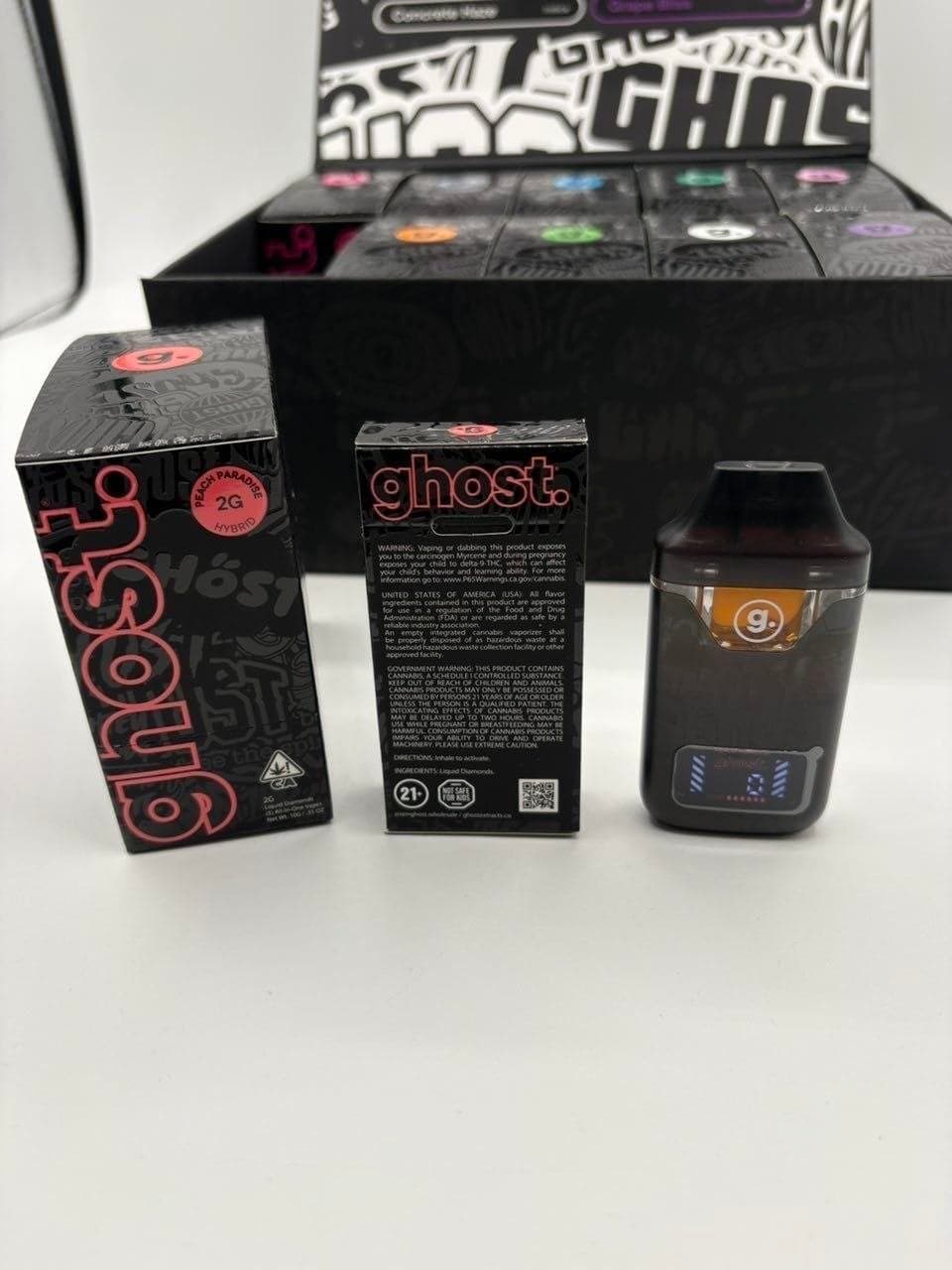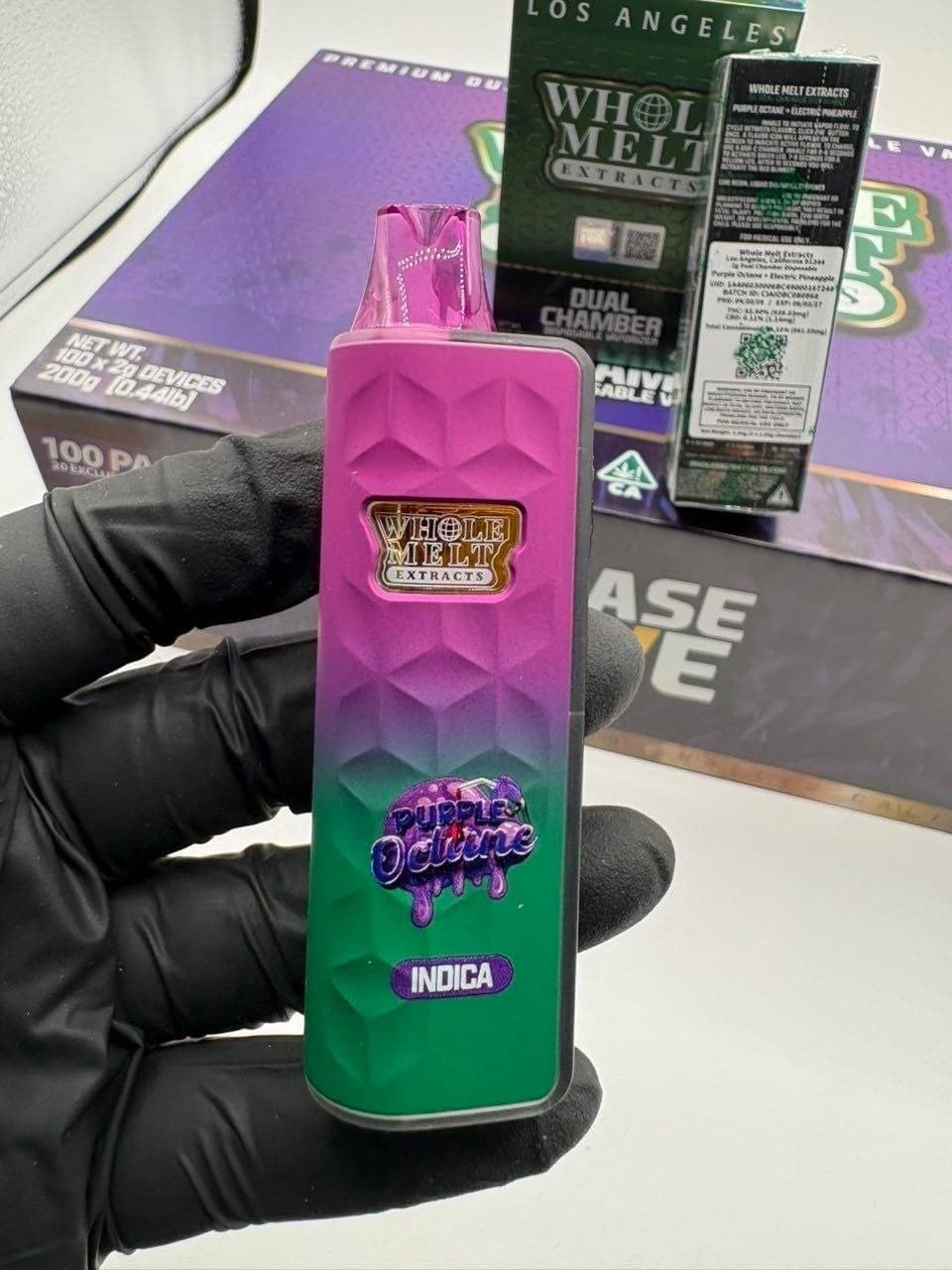
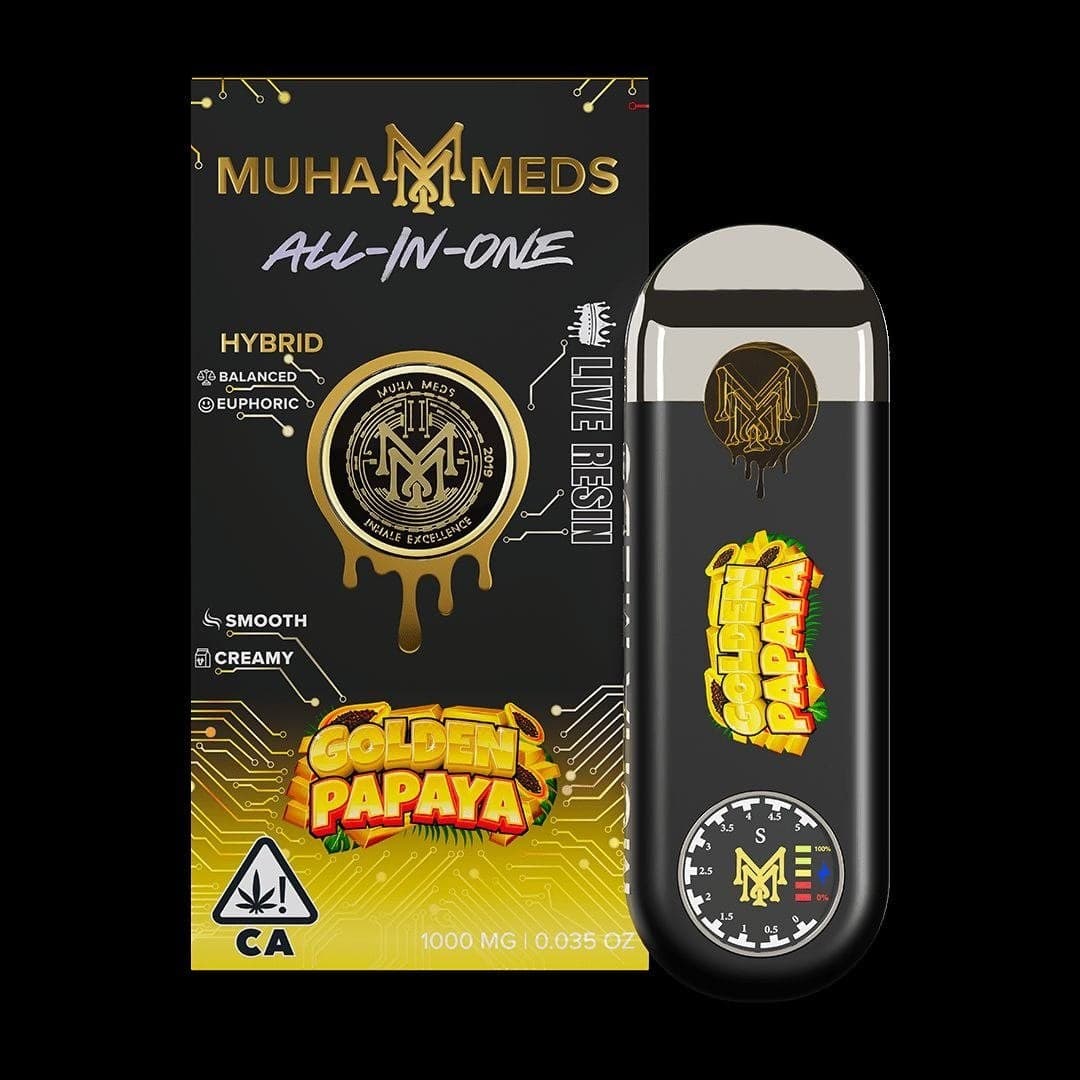
Muha Meds Golden Papaya
$24.99each
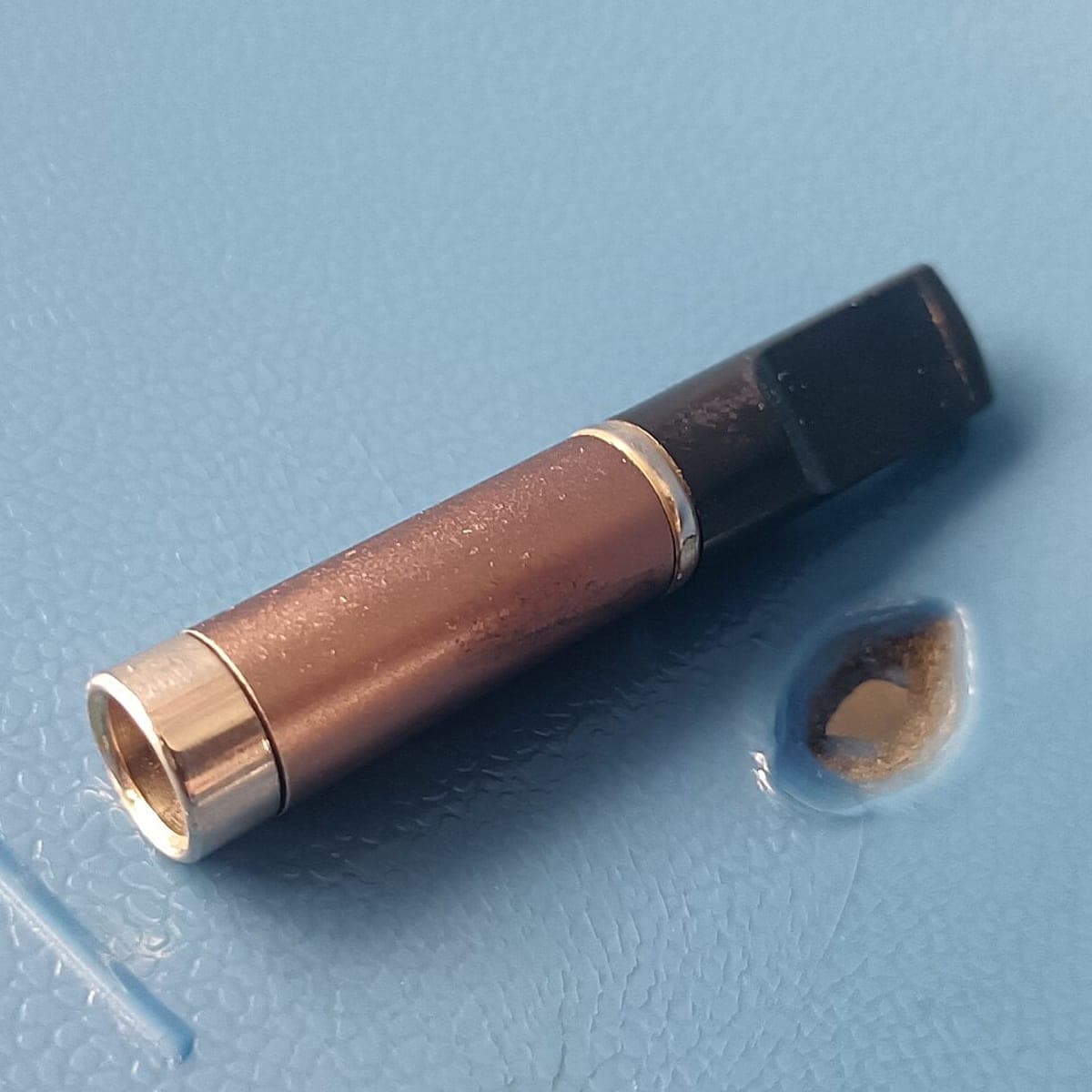
A finished device contains a lithium cell and does not belong in a household bin or a kerbside recycling box. Crushed cells start fires in collection trucks and sorting facilities. Take them to a battery drop-off or an electrical waste point, discharge them first, and never open one.
Editorial Team · Compliance and product research · Updated
Every all-in-one device in this category contains a small lithium-ion cell. When it reaches the end of its life it is electrical waste, and the one place it must not go is a household bin.
This is not an abstract environmental point. It is a fire that starts in a collection truck.
Waste collection compacts. A lithium cell that is crushed, punctured or torn can enter thermal runaway — a self-sustaining reaction that produces its own oxygen and burns extremely hot.
Fires in refuse trucks and at sorting facilities caused by discarded batteries are a well-documented and growing problem, and vapes are a significant and rising share of them. The cell is small; the fire is not.
Battery drop-off points. Many supermarkets, hardware shops and electronics retailers have a collection box near the entrance. This is the easiest option and it is usually free.
Household hazardous waste or electrical waste facilities. Most municipalities run one. Search your city or county name with "household hazardous waste" and you will generally find a site and its hours.
Retailer take-back. Some sellers in this category accept devices back. It is worth asking where you bought it.
What you are looking for is anything that says *batteries* or *e-waste*. A device is both.
Do not prise apart a device to remove the cell, and do not attempt to charge a cell directly.
The cells used here are small pouch or cylindrical types with no protective casing you would recognise, and puncturing one is exactly the failure mode described above. There is nothing serviceable inside and nothing worth recovering.
A 510 cartridge has no cell. It is a small assembly of metal, plastic and usually glass or ceramic, with oil residue in it.
It still should not go in kerbside recycling — mixed-material items contaminate the stream and the residue is not something a sorting facility wants. Most e-waste points will take them, and some retailers will.
This is one genuine advantage of a cartridge system: one cell every year or two instead of one with every device. The trade-offs are in disposable or cartridge.
A device that is swollen, leaking, has been dropped hard, or has been wet should be handled as a hazard rather than as rubbish.
Do not charge it, do not use it, and do not leave it in a warm place. Put it somewhere non-flammable — a metal tin, outdoors if possible — and take it to a proper facility rather than posting it or binning it.
The warning signs are the same ones listed in charging a rechargeable disposable safely.
Lithium cells are restricted in the post, and a damaged one is restricted more tightly still. Carriers have rules about this and they exist for good reason.
If you are returning something to a seller, ask how they want it sent before sending it.
Card packaging is ordinary recycling. Keep it until the device is finished, though — the batch code is on the box rather than the device, and it is the only link between the object and its laboratory record. See storing devices.
A rechargeable device that uses its full capacity is one cell for two grams rather than two cells for two grams. A cartridge system is better again if you will actually keep the battery.
Neither is a green choice in any strong sense. Both are meaningfully better than discarding a cell with oil still in it.
Sold to adults 21 and over. This article is about hardware. What a particular device is filled with, and in what quantity, is a question for the certificate of analysis issued against the batch code on its packaging — not for an article, and not for anything printed on a box.

A 510 cartridge is a small tank with a threaded base that screws onto a separate battery. The number is a thread specification, not a brand or a capacity. It is the most widely shared fitting in the category, which is why a cartridge from one maker usually fits a battery from another.
An all-in-one disposable arrives with its own battery and works out of the box. A 510 cartridge is a tank only and needs a battery you already own. Product names rarely make the difference obvious, and buying the wrong one is the most common ordering mistake in the category.

Store devices upright at room temperature, out of direct sun and out of a car. Heat thins oil and floods coils, cold thickens it and starves them, and light degrades what is inside. A part-used device going into a drawer should be left about half charged rather than full or empty.
Your cart is empty
Everything we sell is batch-tested, and we tell you what ships to your state before you add it.
Browse the shop