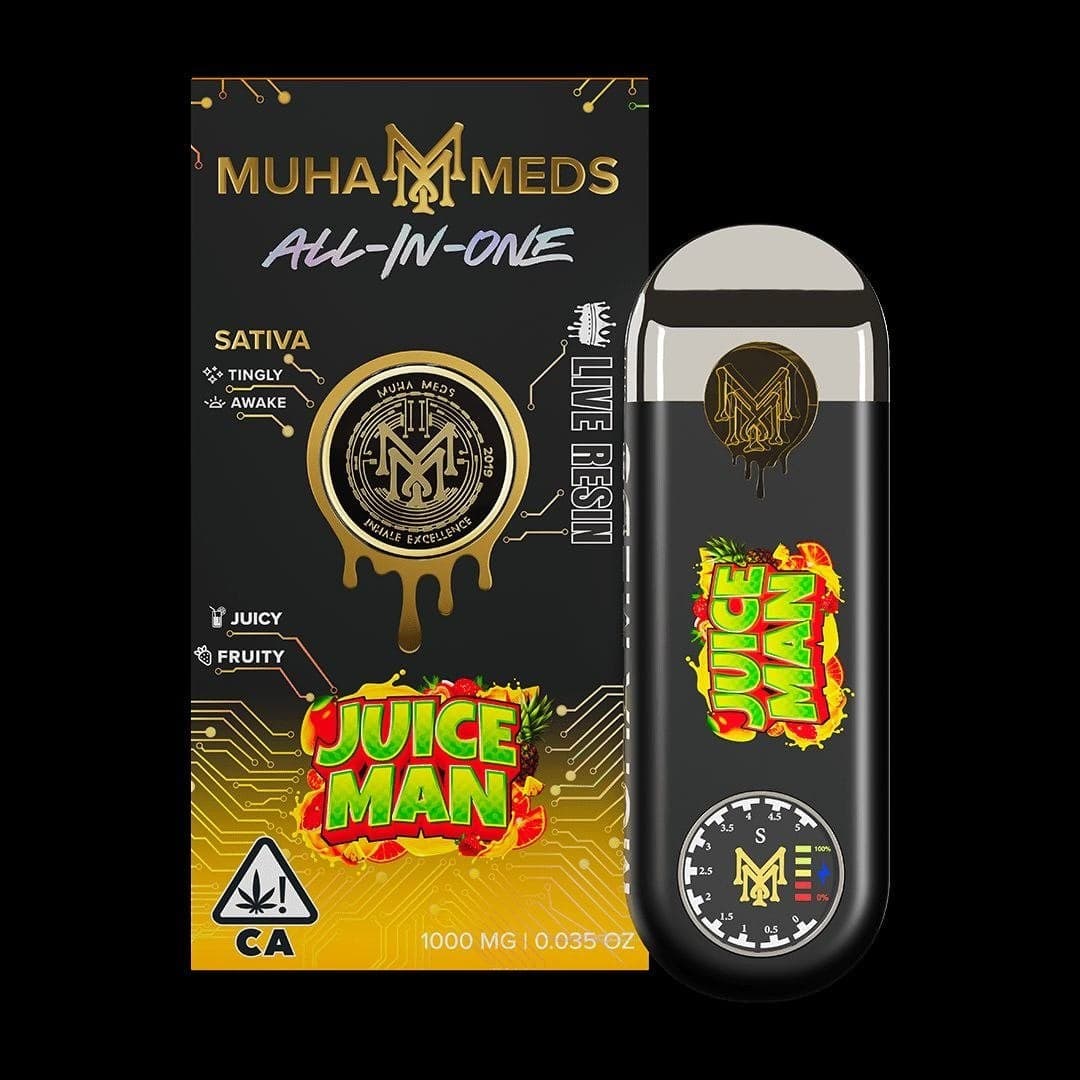
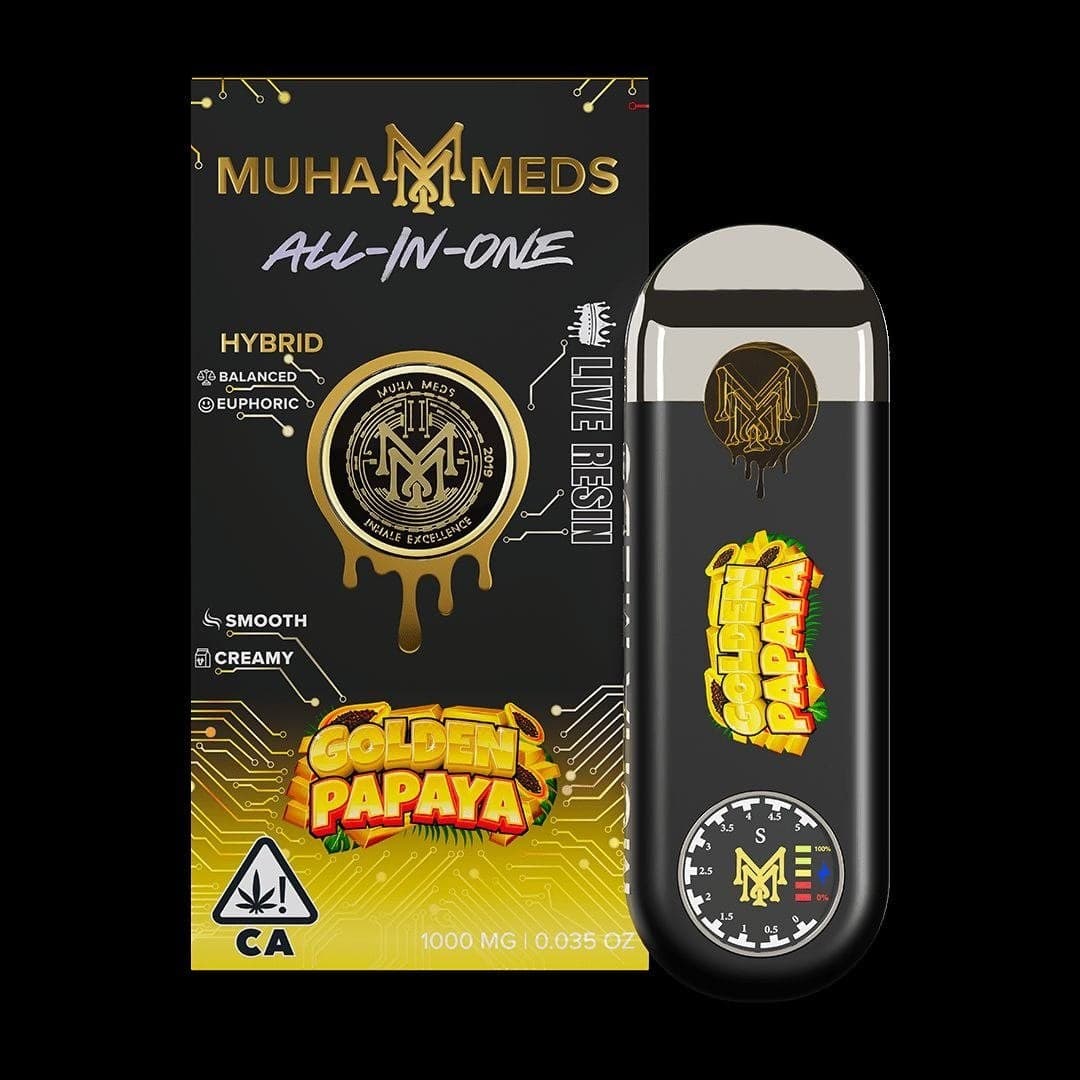
Muha Meds Golden Papaya
$24.99each
The coil is the part that turns oil into vapour, and its material and geometry change how a device performs more than most people expect. Ceramic cores dominate modern cartridges because they heat evenly and do not shed fibres. Hardware differences explain most complaints that get blamed on contents.
Editorial Team · Compliance and product research · Updated
Two devices filled from the same batch can perform noticeably differently, and the reason is almost always the coil. It is the least discussed component and the one that does the actual work.
A coil is a heating element. Current passes through it, it warms, oil in contact with it turns to vapour, and airflow carries that vapour up the mouthpiece.
The whole design problem is getting oil to the element at the same rate the element turns it to vapour. Feed too slowly and the element runs dry and scorches. Feed too fast and unvaporised oil floods the airway.
Early designs wrapped resistance wire around a fibrous wick — cotton, silica or fibreglass — which drew oil to the wire by capillary action.
It works, and it has two well-known problems. Fibres degrade with heat and can shed. And the wick holds a reservoir of oil right against the element, so a hot device tends to leak at the base as that oil thins.
A ceramic core replaces the wick with a porous ceramic body, either with wire embedded in it or with a conductive element printed on it.
The advantages are real. Porous ceramic distributes heat across a larger area rather than concentrating it at a wire, so there are fewer hot spots and less scorching. It sheds nothing. And because the pore structure controls the feed rate mechanically, it handles thicker oil better than a wick does.
This is why so many current listings mention ceramic. It is not decoration — the Muha Meds all-in-one devices such as Golden Papaya and Juice Man specify a custom ceramic postless coil, and the brand's 510 cartridges such as Purple Breath specify a ceramic core.
A postless cartridge has no centre post for oil to be poured around. It fills from the base through the same channels the oil later travels to reach the coil.
Two practical consequences: fewer trapped air pockets at filling, and a cleaner airflow path. A trapped bubble sitting against a coil is a dry hit waiting to happen, and postless designs have fewer places for one to hide.
A device that tastes scorched, produces little vapour, or floods is usually a hardware or a handling problem rather than a contents problem.
None of that is diagnosable from a product page, which is why why a cartridge clogs is worth reading before assuming a device is defective.
With a 510 cartridge on a variable battery you control the element temperature directly.
Lower settings favour flavour and are gentler on the coil. Higher settings produce more vapour and run hotter. If a cartridge tastes harsh, drop the voltage before you conclude anything about it — the same tank at two settings can seem like two products.
An all-in-one makes this decision for you, which is part of what you are buying.
Airflow holes are as much a part of the design as the coil. A tighter draw concentrates vapour and tends to read as stronger flavour; an open draw is smoother and cooler.
Some devices offer an adjustable ring. Most do not, and on those the draw is a fixed characteristic of the device rather than something you can tune.
Hardware determines how a device behaves. It tells you nothing whatsoever about what is inside it or in what quantity.
That comes from the certificate issued against the batch code on the packaging, and nowhere else — not from the box, not from a product page, and not from an article. The guide to certificates of analysis covers what one should contain and how to match it to the code in your hand.
Sold to adults 21 and over. This article is about hardware. What a particular device is filled with, and in what quantity, is a question for the certificate of analysis issued against the batch code on its packaging — not for an article, and not for anything printed on a box.
A 510 cartridge is a small tank with a threaded base that screws onto a separate battery. The number is a thread specification, not a brand or a capacity. It is the most widely shared fitting in the category, which is why a cartridge from one maker usually fits a battery from another.
An all-in-one disposable arrives with its own battery and works out of the box. A 510 cartridge is a tank only and needs a battery you already own. Product names rarely make the difference obvious, and buying the wrong one is the most common ordering mistake in the category.
Store devices upright at room temperature, out of direct sun and out of a car. Heat thins oil and floods coils, cold thickens it and starves them, and light degrades what is inside. A part-used device going into a drawer should be left about half charged rather than full or empty.
Your cart is empty
Everything we sell is batch-tested, and we tell you what ships to your state before you add it.
Browse the shop